- Part 1
- your proposed argument topic with your classmates.
- your personal position about this issue?
- submit two sources
Part 2- outline
Example attached i files below, along with an example for part one
Part 2- outline
Example attached i files below, along with an example for part one
Use this activity to assess whether you and your peers can:
Use the drop-down menu to learn about the three steps needed to complete this assignment.
Gosset’s Seed Plot Data
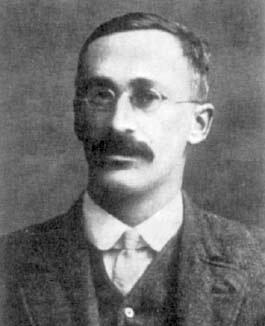
William S. Gosset was employed by the Guinness brewing company of Dublin. Sample sizes available for experimentation in brewing were necessarily small. At that time, Gosset contacted a famous statistician Karl Pearson (1857-1936) and was told that there were no techniques for developing probability models for small data sets. Gosset studied under Pearson, and the outcome of his study was perhaps the most famous paper in statistical literature, “The Probable Error of a Mean” (1908), which introduced the T-distribution.
Since Gosset was employed by Guinness, any work he produced would be owned by Guinness, so he published under a pseudonym, “Student”; hence, the T-distribution is often referred to as Student’s T-distribution.
To illustrate his analysis, Gosset used the results of seeding 11 different plots of land with two different types of seed: regular and kiln-dried. He wanted to determine if drying seeds before planting increased plant yield. Since different plots of soil may be naturally more fertile, this confounding variable was eliminated by using the matched pairs design and planting both types of seed in all 11 plots.
The resulting data (corn yield in pounds per acre) are as follows.
| Plot | Regular seed | Kiln-dried Seed |
|---|---|---|
| 1 | 1903 | 2009 |
| 2 | 1935 | 1915 |
| 3 | 1910 | 2011 |
| 4 | 2496 | 2463 |
| 5 | 2108 | 2180 |
| 6 | 1961 | 1925 |
| 7 | 2060 | 2122 |
| 8 | 1444 | 1482 |
| 9 | 1612 | 1542 |
| 10 | 1316 | 1443 |
| 11 | 1511 | 1535 |
We use these data to test the hypothesis that kiln-dried seed yields more corn than regular seed.
Because of the nature of the experimental design (matched pairs), we are testing the difference in yield.
| Plot | Regular seed | Kiln-dried Seed | Difference |
|---|---|---|---|
| 1 | 1903 | 2009 | 106 |
| 2 | 1935 | 1915 | 20 |
| 3 | 1910 | 2011 | 101 |
| 4 | 2496 | 2463 | 33 |
| 5 | 2108 | 2180 | 72 |
| 6 | 1961 | 1925 | 36 |
| 7 | 2060 | 2122 | 62 |
| 8 | 1444 | 1482 | 38 |
| 9 | 1612 | 1542 | 70 |
| 10 | 1316 | 1443 | 127 |
| 11 | 1511 | 1535 | 24 |
Note that the differences were calculated: regular kiln-dried.
Regular seed: regular seeds that were traditionally used for planting
Kiln-dried seed: seeds that were kiln-dried before planting
Open the seeds datafile in the Stats at Cuyamaca College group on StatCrunch ( – opens in a new tab).
But first you will need to review the (opens in a new tab).
Each link will open in a new window. To return to this assignment, either close the new tab or select the tab for this assignment.
Here is a PDF document with all .
Use the Module 22 (opens in a new tab) to ask questions or provide feedback about the problems in any Module 22 activity – including this peer-reviewed assignment.
Click the “Next” or > button to continue.
Content by Cuyamaca College math faculty and licensed under the .
Formative Assessments w/ StatCrunch
| Criteria | Ratings | Pts |
|---|---|---|
|
This criterion is linked to a Learning OutcomeAnswering the Prompt |
|
8 pts |
|
This criterion is linked to a Learning OutcomeStatCrunch |
|
2 pts |
Total Points: 10
NLRA Paper Assignment
Read about the National Relations Act(NLRA/Wagner Act) 1935 in your book and at the following link.
1935 passage of the Wagner Act | National Labor Relations Board (nlrb.gov)
Then:
Watch the movie Brothers On the Line (2012) at the below link.
The paper should be AT LEAST 3 Pages(3 pages of work of page including your name class etc does not constitute work) Double Spaced 12 point font (typically the default settings in MS Word)1 inch margins and include a works cited page if you use any other sources.
ALL WORK MUST BE ORIGINAL USAGE OF AI WILL NOT BE TOLERATED!! THIS INCLUDES PROGRAMS SUCH AS GRAMMARLY, CHEGG, ETC.
PART 1
Develop a 2-4 page review on the importance of the budgeting process to a health care organization, as well as demonstrate an understanding regarding the differences between an operational budget and a capital budget. Additionally, prepare an operational budget for the medical-surgical department at the St. Anthony Medical Center.
Note: This assessment uses Vila Health: Developing an Operating Budget media as the context for developing your budget. Please make sure you have reviewed this multimedia before you complete your assessment submission.
Financial management is something that touches us all. We are each responsible for our own personal and family budgets, and many of us are also responsible for budgets at work. Regardless of your experience with financial management, it is a critical skill to have, and it will be necessary to master this skill as you move forward in your health care administration career. Almost all health care administrators will be responsible for a budget at some point in their careers. Administrators must also know how to read basic financial statements and reports to assess the performance of their organization, other organizations, or their department.
Budgeting is an important consideration in strategic planning for any health care organization. The most basic definition of budget is a plan that identifies expected financial inputs and outputs. A budget should be closely aligned with a strategic plan, which is a strategy used by an organization to achieve its mission. Organizations may use different types of budgets, such as master budgets, statistics budgets, operating budgets, revenue budgets, expense budgets, and capital budgets (Reiter & Song, 2021). We will explore each at a high level.
For this assessment, you will be asked to consider the different types of budgets that are used in the health care field. By researching other organizations that use budgets, you will apply the course materials to a real-world situation. The assessment will further refine those skills as you navigate the St. Anthony Medical Center medical-surgical department budget (from the Vila Health multimedia). You will prepare a paper and a basic budget to demonstrate the knowledge that you acquired in this assessment.
Many learners enter the field with limited exposure to finances. Depending on your current knowledge and comfort level with the subject, it may be necessary to conduct additional research and spend extra time addressing some of the basics. In other words, the resources in this course will help to provide a foundation for you to complete the assessments, but it is possible that you will need to do your own research in the Capella University Library to fully address all scoring guide criteria.
The assessment has two distinct parts:
Relevant scoring guide criteria:
For Part 1 of this assessment, use the information presented in the multimedia as context to create your operating budget. Using the data provided in the first three columns, develop an operating budget for the medical-surgical department at the St. Anthony Medical Center for the next fiscal year, as well as estimate the revenue and expenses for the remainder of the current fiscal year. (Assume that next year’s revenue will be unchanged from the current year’s revenue; however, the department will need to cut operating expenses by 5 percent for next fiscal year.)
You may download and use the Excel spreadsheet from the multimedia as your template for this part, or use the Excel spreadsheet .
In the second part of the assessment, demonstrate your understanding of the importance of budgets within the context of financial and strategic planning for health care organizations. A comprehensive analysis of the budget consists of your interpretation of the numbers: What are the numbers telling you? Use the readings from your textbooks, and , as well as the independent research you conducted to fully develop a 24 page (excluding cover and references pages) response to the relevant scoring guide criteria:
You may use the template to complete this part of the assessment.
Your assessment should also meet the following requirements:
PART 2
Develop a 4-6 page analysis of St. Anthony Medical Center’s finances over three fiscal years, which includes considerations such as assets, liabilities, revenues, and changes in financial position.
Note: This assessment uses Vila Health: Financial Statement Analysis media as the context for developing your analysis. Please make sure you have reviewed this multimedia before you complete your assessment submission.
Costs are evaluated very closely by all levels of health care administrators. Costs are broken down into different categories, such as direct costs versus indirect costs, and fixed costs versus variable costs (Nowicki, 2024). You will examine these types of costs and learn analytical methods such as break-even analyses and cost allocation methodologies. These methodologies explore the relationship between volume and cost and demonstrate why volume plays an important role in the planning process.
For this assessment, you will research how costs are allocated from overhead departments to revenue-generating departments. You will conduct independent research on cost allocation methodologies in addition to using the materials provided in the text. You will also consider the steps involved in preparing a cost-benefit analysis (CBA) when deciding to purchase a capital item such as an MRI machine.
The balance sheet, activity statement (also known as an income statement), and statement of cash flows are three of the most common types of financial statements that organizations prepare. You can think of balance sheets as a picture of the financial position of an organization at a given period in timefor example, as of December 31, 20xx. On the other hand, an activity statement or income statement will show the financial position of an organization over a longer period of timefor example, an entire month, quarter, or year (Reiter & Song, 2021).
You will explore these types of statements and apply your new knowledge to the health care administration field. You will analyze specific financial statements and think about the financial health of an organization based on the statements provided. You will have several opportunities to practice your analytical skills within this assessment by exploring the concept of ratio analysis. Ratio analysis is one more way that both internal and external stakeholders can increase understanding of the financial position of an organization. Ratio analysis compares financial statement data to provide another view that may then be benchmarked or compared to other organizations. Some common ratio types include liquidity ratios, profitability ratios, activity ratios and capital structure ratios (Nowicki, 2024).
Additionally, it is important to support your analysis with reference to relevant literature. While it is appropriate to use your textbook as part of that support, your paper should reference at least three outside articles in addition to the text.
This assessment has two main parts.
This part of the assessment focuses on analyzing the balance sheet for St. Anthony Medical Center. Relevant scoring guide criteria:
Some prompts to help guide you in your analysis are:
The goal of this analysis is to create an accurate picture of the financial trends for St. Anthony Medical Center, its current financial obligations, and how the upcoming fiscal year projects in light of this information.
This part of the assessment focuses on analyzing the income statement for St. Anthony Medical Center. Relevant scoring guide criteria:
Some prompts to help guide you in your analysis are:
The goal of this analysis is to create an accurate picture of trends tied to the overall financial health of St. Anthony Medical Center.
Your assessment should also meet the following requirements:
3 options with 1 common set of guidelines
Purpose: This assignment is meant to give you an opportunity to develop and articulate your view of critical issues in law and society. In other words, I want you to show me your perspective, and I encourage you to develop your ideas and opinions. However, your opinion must be grounded in scholarly research, and you must engage with evidence or arguments both in favor and against your perspective.
Essay Options
Option 1: Argue to uphold or overturn a major supreme court case
This semester we have learned about dozens of important court decisions that have shaped our understanding of law and society. In some instances, weve learned about the court issuing a ruling at one time, and then reversing itself years later as facts, circumstances, or politics change. Take an existing court ruling, one that is standing as law today, and either argue for or against overturning it.
Option 2: Argue for or against amending the constitution
This semester we have taken a brief look at American constitutional history, including moments of constitutional expansion (ie: the reconstruction amendments), and the ways that courts have changed their interpretation of the Constitutions amendments. Now, as we approach the 250thanniversary of the Declaration of Independence, it is worth considering whether the constitution should be changed, either by editing an existing Amendment, or adding a new one.
Option 3: Identify a violation of the rule of law and how the Rule of Law can be strengthened
Return to our week 1 discussion of Paul Gowders 3 pillars of the rule of law: regularity, publicity, and generality. Do you see areas of the law where one of these elements of the rule of law is being violated today? Identify the violation, what may be causing it, and what it might take to repair this violation and strengthen the rule of law.
Guidelines for all essay options:
Structure and Requirements: Your essay should have an introduction, conclusion, and 3 main body elements. In the body of your essay, you should develop 2 arguments for your position and engage with 1 strong argument against your position. When you engage with the counter-argument, explain that perspective fully and then explain why your perspective remains stronger. Reference the elephant in the room.
Length and formatting: Your essay should be a minimum of 4 pages long, though 5 pages is encouraged. Use Times New Roman, 12pt font, double spaced, with 1-inch margins. You may either place citations on the last page or in footnotes.
Scholarly engagement and citations: Do not use Chat-GPT, Grammarly, or other AI programs. You must cite at least 3 sources (one per major body section), but are encouraged to cite more. They must all be external sources, not the casebook, lecture, or assigned readings (these are acceptable to reference but dont count towards your citation total). Cite academic sources – peer reviewed scholarly journal articles or books published by academic presses. Do not use History.com, Encyclopedia Brittanica, etc., as a citation. I should be able to locate your citations through a search on google scholar.
Grading Rubric: Each of the 3 main body sections of your paper is worth 2 points capturing the quality or your explanation of the issue and argument about how it supports or opposes your overall argument. Your explanation of why your argument outweighs the counter-argument is worth an additional point. The introduction and conclusion count for 1 point, and writing quality and references count for 1 point each, for a total of 10.
Late Policy: This essay should take 1 week to complete. Please treat April 29 as the last day to turn in work that you can complete much earlier.
AI Policy: If we suspect AI usage in a paper, we will schedule a meeting to verify student knowledge of the paper’s contents and ideas before confirming a grade based on that conversation. If the meeting is not resolved satisfactorily, the issue will be referred to the Dean of Students.
These programs are:
4A 5C 2B 2D 310100010000010000001010001100011100010010010100010110110001100Symbol: A, Frequency: 5Positions: 0 1 3 7 9 Bits to represent the position(s): 23
Symbol: D, Frequency: 3Positions: 5 6 8 Bits to represent the position(s): 17
Symbol: B, Frequency: 2Positions: 4 10 Bits to represent the position(s): 12
Symbol: C, Frequency: 2Positions: 2 11 Bits to represent the position(s): 10
Decoded message: AACABDDADABC
Notes:
// Hostname = 172.25.215.151, port = 3360
/*
struct student
{
char name[20];
int psid;
int grade;
};
*/
this is an example of a server.cpp file
#include <unistd.h>
#include <stdio.h>
#include <stdlib.h>
#include <string.h>
#include <iostream>
#include <sys/types.h>
#include <sys/socket.h>
#include <netinet/in.h>
struct student
{
char name[20];
int psid;
int grade;
};
// Fireman function
void fireman(int)
{
while (waitpid(-1, NULL, WNOHANG) > 0);
}
int main(int argc, char *argv[])
{
int sockfd, newsockfd, portno, clilen;
struct sockaddr_in serv_addr, cli_addr;
int n;
// Creating a signal to execute the fireman function when a child process end its execution
signal(SIGCHLD, fireman);
// Check for the port number from the command line
if (argc < 2)
{
std::cerr << “ERROR, no port providedn”;
exit(1);
}
//Create a socket descriptor
sockfd = socket(AF_INET, SOCK_STREAM, 0);
if (sockfd < 0)
{
std::cerr << “ERROR opening socket”;
exit(1);
}
//Populate the sockaddr_in structure
bzero((char *)&serv_addr, sizeof(serv_addr));
portno = atoi(argv[1]);
serv_addr.sin_family = AF_INET;
serv_addr.sin_addr.s_addr = INADDR_ANY;
serv_addr.sin_port = htons(portno);
// Bind the socket descriptor with the sockaddr_in structure
if (bind(sockfd, (struct sockaddr *)&serv_addr,
sizeof(serv_addr)) < 0)
{
std::cerr << “ERROR on binding”;
exit(1);
}
// Set the maximum number of concurrent connections
listen(sockfd, 20);
clilen = sizeof(cli_addr);
while (true)
{
// Accept a request from the client. A new socket descriptor is created to handle the request
newsockfd = accept(sockfd, (struct sockaddr *)&cli_addr, (socklen_t *)&clilen);
// Create a child process to answer the request.
if (fork() == 0)
{
if (newsockfd < 0)
{
std::cerr << “ERROR on accept”;
exit(1);
}
student s;
n = read(newsockfd, &s, sizeof(student));
if (n < 0)
{
std::cerr << “ERROR reading from socket”;
exit(1);
}
std::cout << “Name: ” << s.name << std::endl;
std::cout << “PSID: ” << s.psid << std::endl;
std::cout << “Grade: ” << s.grade << std::endl;
//Close the newsocket descriptor
close(newsockfd);
// Terminate the child process
_exit(0);
}
}
close(sockfd);
return 0;
}
and below is example of client.cpp
#include <unistd.h>
#include <iostream>
#include <string.h>
#include <stdlib.h>
#include <sys/types.h>
#include <sys/socket.h>
#include <netinet/in.h>
#include <netdb.h>
struct student
{
char name[20];
int psid;
int grade;
};
int main(int argc, char *argv[])
{
int sockfd, portno, n;
struct sockaddr_in serv_addr;
struct hostent *server;
// Checking for the hostname and port number from the command line.
if (argc < 3)
{
std::cerr << “usage ” << argv[0] << “hostname portn”;
exit(0);
}
// Creating a socket descriptor
sockfd = socket(AF_INET, SOCK_STREAM, 0);
if (sockfd < 0)
std::cerr << “ERROR opening socket”;
// Storing the hostname information
server = gethostbyname(argv[1]);
if (server == NULL)
{
std::cerr << “ERROR, no such hostn”;
exit(0);
}
// Transforming the port number to int
portno = atoi(argv[2]);
// Populating the sockaddr_in structure
bzero((char *)&serv_addr, sizeof(serv_addr));
serv_addr.sin_family = AF_INET;
bcopy((char *)server->h_addr,
(char *)&serv_addr.sin_addr.s_addr,
server->h_length);
serv_addr.sin_port = htons(portno);
// Connecting to the server
if (connect(sockfd, (struct sockaddr *)&serv_addr, sizeof(serv_addr)) < 0)
{
std::cerr << “ERROR connecting”;
exit(1);
}
// Sending a symbol
student s = {“Carlos Rincon”,1234,100};
n = write(sockfd, &s, sizeof(student));
if (n < 0)
{
std::cerr << “ERROR writing to socket”;
exit(1);
}
// Closing the socket
close(sockfd);
return 0;
}
Below, we have provided a suggested format to help you organize your work. Youre welcome to use it or adapt it to your own style just be sure your final submission meets all the requirements in the rubric.
For each assignment, we suggest submitting two files:
Responses to Other Students: Respond to at least 1 of your fellow classmates with at least a 250-word reply about their Primary Task Response regarding items you found to be compelling and enlightening. To help you with your discussion, please consider the following questions:
All sources should be cited using APA format. Grammar, spelling, punctuation, and format should be correct and professional.
read and respond to post
In the role of informatics nurse and Clinical Applications Coordinator I will oversee creation and implementation of a training/education initiative that will facilitate the roll out of electronic medication administration (eMAR/BCMA) technology to critical care services. Critical care services include ICU, ED, and PACU in a 200 bed acute care hospital. This is an expanding healthcare environment that will implement cutting edge technology to current clinical practices. This will add new technological processes to high-risk workflows. As such, I will make certain that thorough and progressive training initiatives are developed to ensure nursing proficiency and patient safety while maintaining quality outcomes.
The first step to this transition would be to identify the necessary staff who will need to be educated on the new system is essential. Education is crucial for the RNs in the ICU, ED, PACU, and medical-surgical units, because they’ll be tasked with scanning medications, verifying them, and keeping the eMAR up to date. In addition, RNs spend the most amount of time with patients; therefore, they are responsible for integrating this new technology into their workflow and maintaining clinical awareness. Changing workflows and communication patterns can be challenging, so nursing staff will need support and education around this topic.
The education program should encompass nurse managers and charge nurses, too, because they’re on hand to address staff questions and supervise the units. Nurse managers and charge nurses should have a more in-depth knowledge of the system so they can lead by example and reinforce training messages with their staff. In addition, pharmacy members, including clinical pharmacists, pharmacists, and technicians, should receive education surrounding the medication administration process as they typically are hands-on with dispensing medications, order alerts, and filling out drug documentation.
Members of other clinical professions that administer medication within these units also need to receive education on barcode scanning and administering medications. For example, within critical care settings, respiratory therapists also administer medications, so they will need training on proper scanning and documentation processes. Overall, there needs to be comprehensive education on the new system; otherwise, there is room for confusion, delay in workflow, poor documentation, increased cognitive load, and risk to patient safety.
Not only is it vital to develop a thorough training education plan, it is also crucial to identify super users that will be placed on each unit. Super users are clinical staff members that have received additional training on system use and work directly on the units to provide real-time support and education. For instance, a nurse or nursing technician may be placed on a unit as a super user and work one-on-one with staff members while they are learning how to use the system. Having super users on each unit will allow clinicians to receive real-time support and answers to questions instead of waiting for IT support to become available. This will decrease any downtime in clinical care and allow providers to get questions answered quickly. In addition to offering support, super users can correct mistakes and allow for safer documentation and medication scanning habits.
Another advantage of super users is their role in bridging the gap between clinicians and IT personnel. Super users, with their insider knowledge of the technology’s functions and its role in clinical practice, serve as a vital link for conveying staff feedback to IT. Also, because super users have knowledge of the system, they can inform clinicians of any updates or changes. During implementation and system updates, super users can assist with peer education, address roadblocks that arise, and reduce staff resistance to change. Moreover, super users can increase efficiency by providing tips and tricks to decrease time spent navigating the system, allowing more time to focus on patients. Lastly, super users can help create a safe learning environment for their peers by ensuring they feel confident in their skills, creating consistency in workflows (Al-Awaysheh et al., 2024).
Ideally, there should be a collaboration to determine who would be appropriate for super users. Nurse managers should be consulted since they know their staff and understand who has the leadership skills to take on this role. Clinical educators should also assist with this decision by identifying potential super users who have great teaching skills, are confident, and are not technophobic. Finally, IT or clinical applications should provide input on potential super users since they understand the knowledge and ability level needed to support staff on the units. After discussing as a team, super users should be selected that have clinical credibility with their peers but also have the ability to educate fellow staff members (Al-Awaysheh et al., 2024).
Moving on to training implementation, nursing staff will first complete computer-based modules that will provide them with an introduction to medication administration processes. “Computer-based learning has numerous advantages. It gives students the chance to accommodate and solve problems independently, it can increase motivation during the learning process, and it offers students direct feedback” (Elcokany et al., 2021).
During this portion of training, nurses will learn about navigation of the system, barcode scanning medication administration workflow, security protocols, and contingency plans in case technology fails. Computer-based modules allow staff to go at their own pace and understanding, while also building a strong foundation before working hands-on in a simulated clinical environment. After completing computer-based modules, nurses will attend classroom-style teaching in which they will utilize a mock electronic health record to practice what they learned during modules. In this setting, nurses will be able to identify medications, scan medications, and manage alerts.
Once training is completed, coaching will be provided by super users and educators on the units during go-live. This education strategy is crucial because nurses will be practicing what they learned during modules and classroom training on actual patients. Consistently providing coaching during this time allows for identification of breakdowns in workflow and any additional education that may be needed. Because coaching will be taking place during medication administration, learning will continue.
The training strategy described above incorporates a blended learning method. Blended learning refers to the use of both computer-based learning and traditional face-to-face training. There is substantial evidence that supports the use of computer-based learning in nursing. One study examined how computer-based case scenarios could impact clinical decision-making among nursing students and found that there was a statistically significant increase in scores related to decision-making and perceived learning (Elcokany et al., 2021). Another study compared computer-based training education to traditional face-to-face learning and found that computer-based education was not inferior to face-to-face education and could be used as an alternative strategy to support nursing knowledge (Al-Awaysheh et al., 2024).
In conclusion, this evidence leads me to believe a singular training strategy wouldn’t be effective. Although computer-based modules allow for flexibility and introduction to main concepts, hands-on learning allows nurses to simulate skills before practicing patients. By using a blended approach to training, many types of learners will be reached while hitting cognitive as well as psychomotor domains. Furthermore, this training strategy will allow nurses to reflect on their knowledge gained from modules and classroom learning while repeating skills during coaching to promote retention (Elcokany et al., 2021).
References
AlAwaysheh, H., AlRuzzeih, M., & Alloubani, A. (2024). Comparing the effectiveness of computerbased teaching versus facetoface teaching of clinically related courses among newly hired oncology nurses. Educacin Mdica, 25, 100894.
Elcokany, N. M., Abdelhafez, A. I., Sharaby, V. M. S., & Belal, S. (2021). Use of computerbased scenarios for clinical teaching: Impact on nursing students decisionmaking skills. Healthcare, 9(9), 1228.
PART 1
Write a 35 page academic paper or a 23 page executive summary, or create a 10-slide PowerPoint presentation, examining a specific patient safety incident that took place and provide insights to senior leaders on the significance of addressing this issue.
Healthcare organizations have always searched for ways to identify and reduce risks. “Over the years, health care risk management has moved from a discipline focused almost exclusively on medical professional liability issues to a profession concerned with all of the risks associated with accidental losses facing a health care organization” (Carroll, 2009, p. 2).
Alarming numbers of unnecessary patient deaths occur in the U.S. hospitals and around the world. “Quality and patient safety in health care have been on the forefront of the public’s mind since the publication of the Institute of Medicine’s (IOM) seminal report, ‘To Err Is Human,’ in 1999” (Johnson et al., 2016, p. xv). The literature supports revising systems and processes in an effort to narrow the difficult safety and quality gaps. Worldwide, issues of patient safety and patient-centered quality care drive healthcare reform. Current approaches are not adequate; patients remain at risk for needless harm.
Demonstrating a firm understanding of the various components of patient safety is fundamental to understanding healthcare quality, risk management, and patient safety overall.
Carroll, R. A. (2009). Risk management handbook for health care organizations. Jossey-Bass.
Johnson, J. K., Haskell, H. W., & Barach, P. R. (2016). Case studies in patient safety. Jones & Bartlett Learning.
Assume the role of a patient safety officer at your local hospital. Analyze a patient safety issue that occurred and then recommend to senior leaders about why it is important to address the issue, along with your recommendations about how to address it. Also provide details of the role you, as the patient safety officer, will play in helping the organization resolve the issue.
Be sure to include all of the following in your chosen format and to address all of the points:
In a healthcare professional setting, recommendations to leadership would typically not be in APA format. However, your paper does need to conform to current APA format and style guidelines. It does need to be clear, persuasive, organized, and well-written, without spelling, grammar, and/or punctuation errors. In addition, recommendations you write in a professional setting would be single-spaced. For the purpose of this assessment, however, please use double-spacing. See the for more information about APA style.
Also, healthcare is an evidence-based field. Your senior leaders will want to know the sources of your information, so be sure to include at least two peer-reviewed sources. You may use the suggested resources for this assessment. Your citations and references do need to conform to current APA guidelines.
Please review the Address a Patient Safety Issue scoring guide to ensure you understand the grading requirements for this assessment.
PART 2
Choose either a 24 page academic paper or a 810 slide PowerPoint presentation with audio to explain risk management function, given a patient safety scenario.
Healthcare organizations have always searched for ways to identify and reduce risks. An organization’s ability to identify and analyze its risk exposure is a determining factor in the effectiveness of its risk management program (Hoarle, 2015). Early identification and analysis are essential.
Current healthcare risk management practices were developed in the mid-1970s as a result of a surge in malpractice suits. These suits caused rapid increases in claims costs for the industry, which later resulted in increased insurance premiums. Today, healthcare delivery systems and organizations realize the value of risk management and have developed formalized programs (Hoarle, 2015). In addition, organizations have established mechanisms to review potential incidents of risk and safety concerns (Pelletier & Beaudin, 2018). While risk management programs are responsible for daily management and risk operations, all healthcare stakeholders are responsible for participating in activities that will reduce unnecessary risks and improve safety and quality (Hoarle, 2015).
Hoarle, K. (2015). Risk management poised to grow as healthcare evolves. Biomedical Instrumentation & Technology, 49(6), 433435.
Pelletier, L. R., & Beaudin, C. L. (2018). HQ solutions: Resource for the healthcare quality professional (4th ed.). Wolters Kluwer.
Summarize the key points discussed in the assessment.
Reflect on the importance of a risk management plan in ensuring patient safety and organizational success.
PART 3
Create a presentation (one-page poster and one-page reflection paper or a 68 slide PowerPoint presentation with audio) describing steps you will take as the quality manager to influence the organization’s leadership to cultivate a fair and just culture.
The quality manager at any hospital is required to address deficiencies by improving organizational culture, providing leadership oversight, and cultivating staff relationships within the organization. This role has many priorities. For example, a quality manager is tasked with analyzing any incidents that occur within the organization and creating a leadership action plan with recommended strategies and tactics to address not just the specific incident but to drive safety and quality improvement throughout the organization.
This assessment differs from the first two assessments in that, acting as the quality manager, your focus is broader. Rather than focusing only on identifying specific actions the organization can take to remedy a particular incident that occurred, you will concentrate on what steps you will take as the quality manager to influence the organization’s leadership to cultivate a fair and just culture. What departments, leaders, and personnel will you collaborate with to improve quality for the whole organization? In a fair and just culture, safety is at the forefront of everyone’s job and all associates welcome the opportunity to highlight issueswithout fear of reprisalso that they can be addressed at a systemic level throughout the organization.
Choose a scenario from the Vila Health: Patient Safety activity: patient identification, medication error, or HIPAA.
Choose a format for this assessment.
PowerPoint Presentation With Audio
For recording the presentation, choose Kaltura or similar software. You may find it useful to review the following resources:
Find resources. You are expected to use at least two professional or academic resources from the library.
Describe steps you, as a quality manager, will take to influence the organization’s leadership to cultivate a fair and just culture.
In an APA-formatted paper:
Use the following to create paragraphs in your paper:
Creating a poster or PowerPoint presentation involves organizing your content in a visually appealing and easy-to-read format. Heres a step-by-step guide to help you create a sample poster or PowerPoint presentation.
Here’s a step-by-step guide for you to follow:
Write your answer clearly with correct grammar and punctuation. Write it in word or on a google doc first to check the grammar and punctuation. Do not cut and paste or quote from other sources. The answers to these questions are to be from your own ideas and thoughts. This should be 2-4 paragraphs long. You should respond to at least two other comments, and don’t let your only comment for a question be “I agree with…” Explain why you feel that way.
Drawing
Have you ever tried to explain an idea by drawing it? Are you an artist that keeps a sketchbook or have you just doodled on your notes? Most artists draw in sketchbooks. Why do artists begin by sketching their ideas? What kind of changes did Picasso’s Guernica go through from drawing to final painting? What are the advantages and limitations of using drawing as a primary medium for exploring complex ideas and emotions? How does the immediacy of drawing influence the way artists communicate with their audience?
Painting
Discuss the technique of fresco, highlighting Diego Riveras public murals. Include Michelangelos Sistine Chapel (Chapter 17), Leonardo da Vincis Last Supper (Chapter 17), and Raphaels The School of Athens (Chapter 3) in your discussion. Why do artists use the fresco technique? What is the typical subject matter? We have several murals in the area that are just painting on walls, not frescoes. Why are murals important to a city’s cultural personality? What do they offer to the public that a painting in a museum doesn’t?
Printmaking
Discuss the historical significance of printmaking as a means of disseminating information and artistic expression. How was printmaking important to the development of books and posters? Will electronic devices ultimately replace the printed forms? How has the digital age changed the notion of multiples in printmaking media?
Photography
How much of what we see in a photograph is real? Do you always pose for pictures or act naturally? There are lots of ways to alter photos. How many times do you take pictures just to capture the moment or to share with friends on social networks? What kind of photographs do you take? Family? Vacation? Ceremonies? Explain the importance of photography in your life.