Author: admin

  • TOUCHSTONE

    Touchstone 3: Comparative Visual Communication Analysis: Building Brand Identity through Design

    ASSIGNMENT: Analyze the visual communication aspects of two of the following companies; Coca-Cola, Pepsi, Snapple or Monster Energy, and compare them. Focus on the elements and principles of design, messaging, and advertising.

    SCENARIO: Youve recently joined a marketing firm as a user experience/user interface (UX/UI) researcher. Your firm has been hired by Bad Apples Cider Company to build the brands design. Bad Apples Cider Company is a new brand behind a line of carbonated beverages, bottled teas, and energy drinks. Before designers can work on logos, packaging, and other core components of the visual brand, the UX/UI team needs you to conduct research on Bad Apples Cider Companys market competitors.

    Your team has identified the four main market competitors as Coca-Cola, Pepsi, Snapple, and Monster Energy. Your role in the project is to select two of the four listed brands and conduct research on how the brands designs communicate with the consumer. Your supervisor has tasked you to select two of the competitive brands listed and prepare a written report analyzing how the brands communicate with their consumers.

    You will discuss how both brands employ visual communication theories and principles to communicate messages, moods, and themes to their demographic markets. Your responses must be thorough, as your research will be influential in building a brand identity for Bad Apples Cider Company that will reach the right demographics, enabling the company to compete with Coca-Cola, Pepsi, Snapple, and Monster Energy on a national scale.

    To complete this assignment, you will use the template provided below. You will return the completed template as your Touchstone submission. A sample assignment is also provided.

    Helpful Links:


    A. Directions

    Step 1: Choose the Companies

    Coca-Cola, Pepsi, Snapple, and Monster Energy have many incarnations of their logos product designs. View the version of the logos pictured on the product labels below. Choose two out of the four companies that you will use to format your responses throughout this Touchstone.

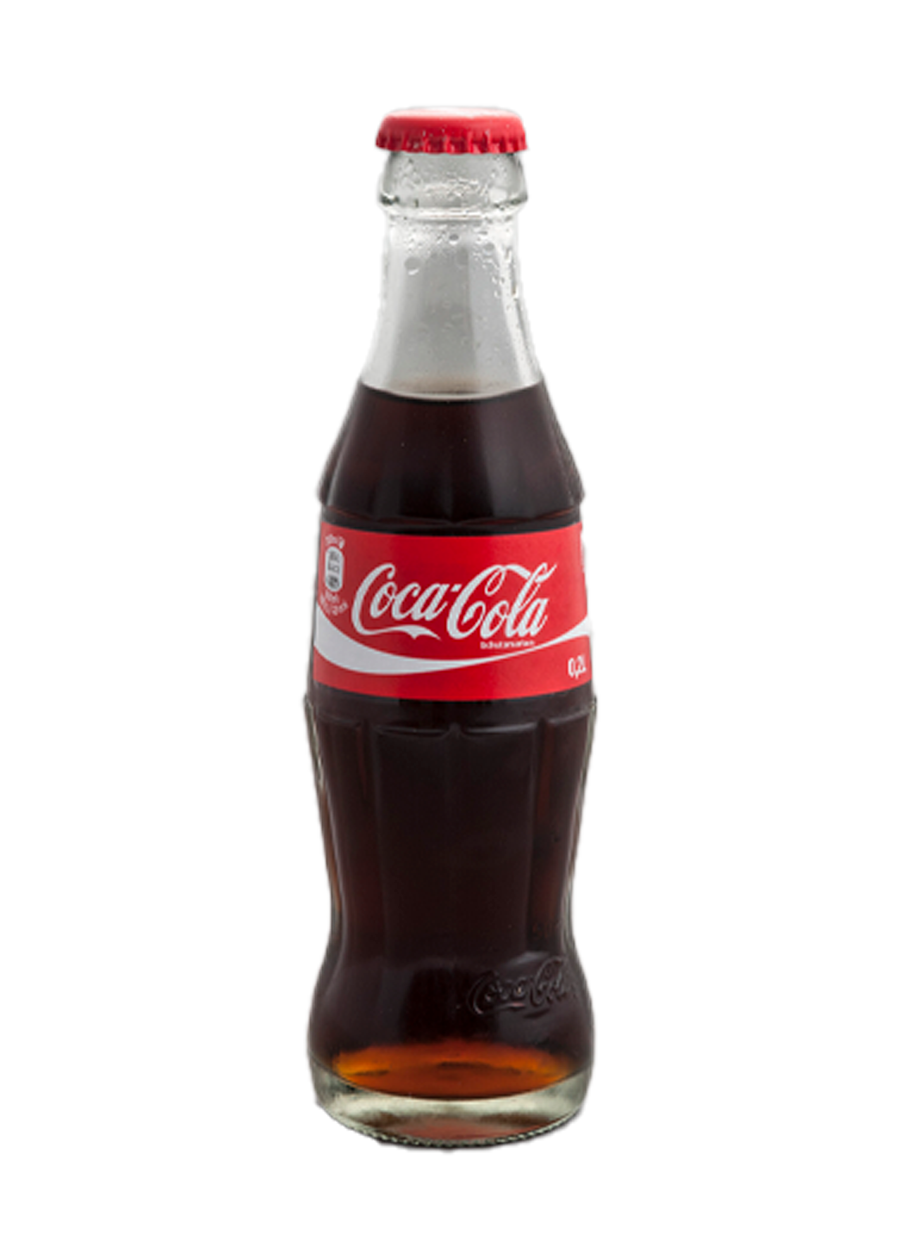
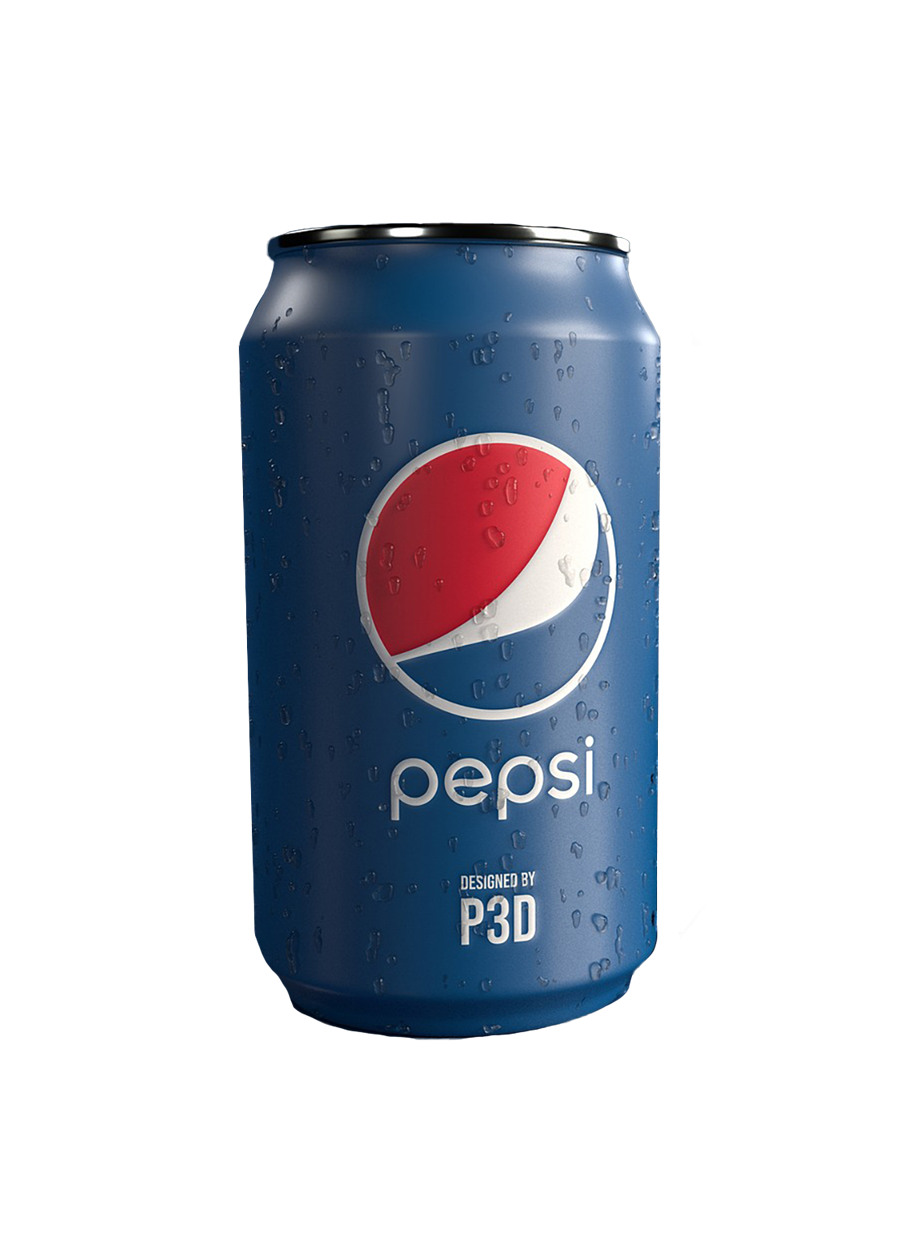
    Coca-Cola Pepsi
    A Coca-Cola bottle. The iconic red label prominently displays the classic white Coca-Cola script logo across the middle. Additional branding elements, such as nutritional information or serving size, appear on the left side of the label, while the bottom right corner shows the volume or size of the bottle. The familiar red and white design stands out against the dark color of the beverage inside the bottle.
    The Coca-Cola logo is one of the most recognizable logos in the world. It features the brand name written in a unique cursive script known as the Spencerian script, which was popular in the late 19th century.
    A blue Pepsi can. The can features the modern Pepsi logo, with a red, white, and blue globe-like symbol at the top, followed by the word 'pepsi' in lowercase letters beneath it.
    The Pepsi logo is a globally recognized symbol that has evolved significantly over the years. The current incarnation is sometimes referred to as the Pepsi Globe.
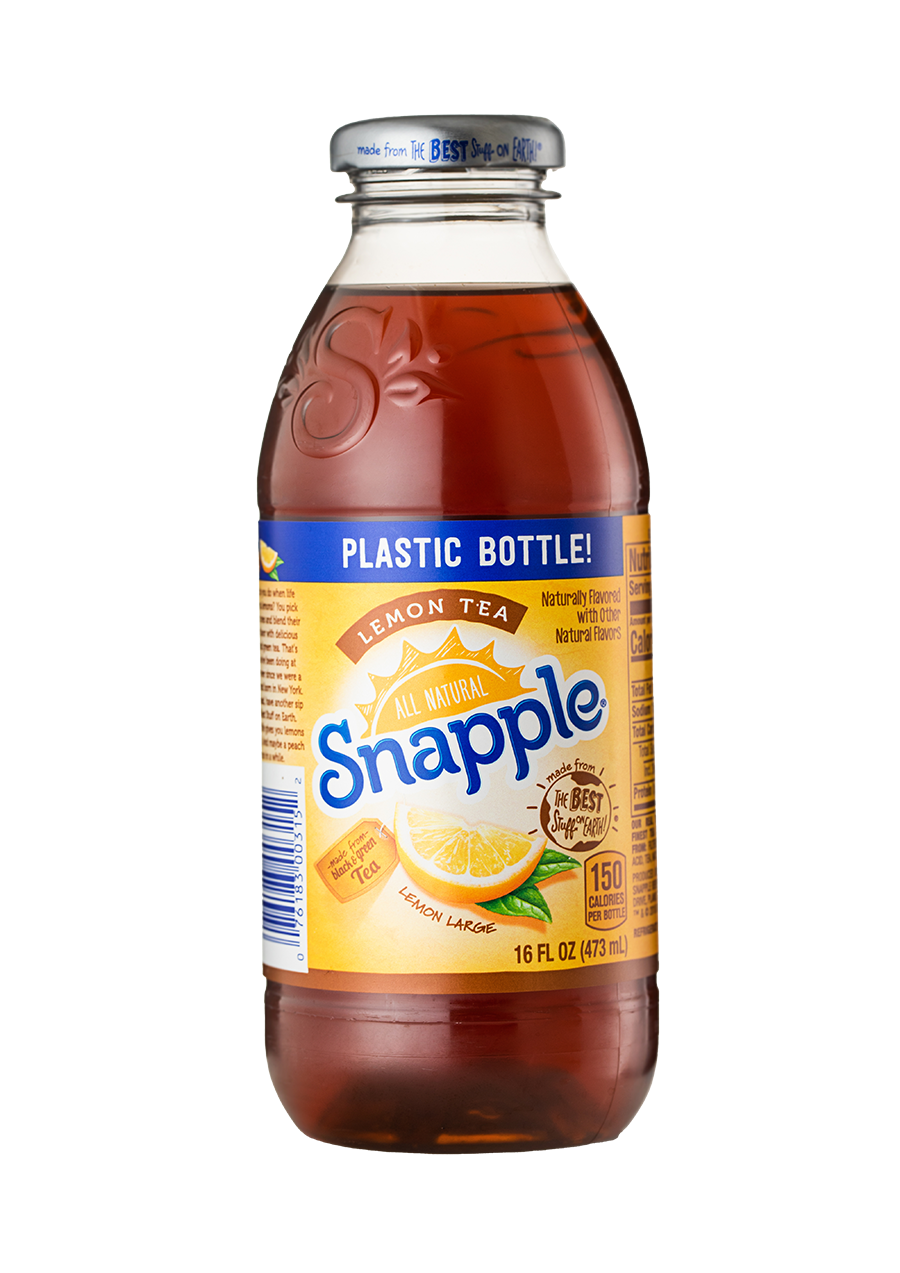
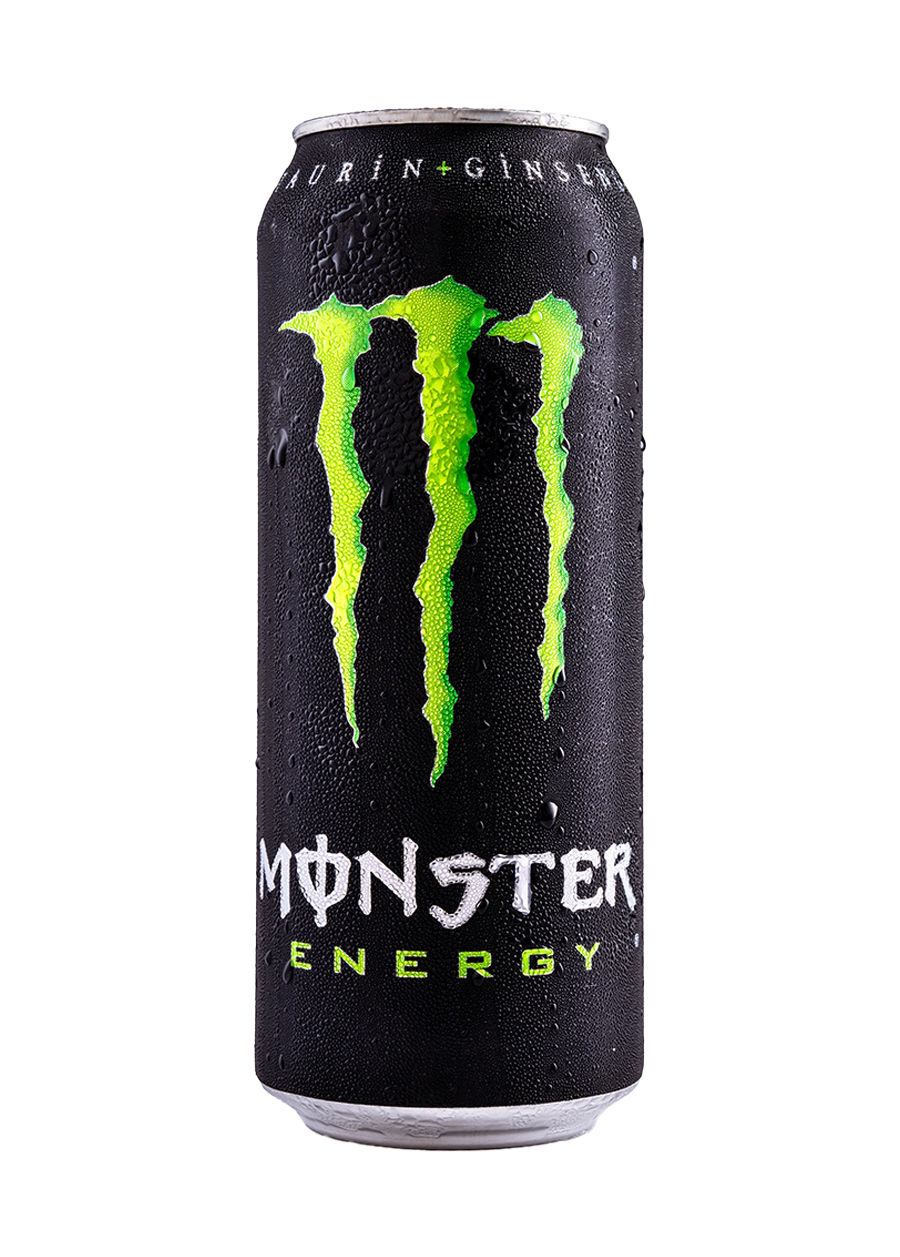
    Snapple Monster Energy
    A Snapple bottle label featuring the 'Lemon Tea' flavor. The label prominently displays the Snapple brand name in bold blue letters, with a sun icon and 'All Natural' text above it. An image of a lemon slice and green leaves is depicted at the bottom center of the label, highlighting the lemon flavor. Additional details such as '150 calories per bottle' and other product information are displayed around the sides. The label has a yellow and orange color scheme, reflecting the lemon tea theme.
    Snapples logo changes reflect its growth and adaptation over the years while maintaining a consistent emphasis on natural ingredients and quality.
    A Monster Energy drink can featuring the iconic, claw-like green 'M' logo in the center, which is stylized to look like it has been scratched into the black background. Below the logo, the words 'MONSTER' appears in bold, white, block letters, followed by 'ENERGY' in smaller green text beneath it.
    The Monster Energy logo is one of the most recognizable in the energy drink market.

    Step 2: Download the Template

    Download and review the . The template is a Microsoft Word file and contains the prompts you will respond to for the two companies you choose. You will type your answers directly into the template and submit it as a Word file. Any other submission file or format will be returned ungraded.

    It may help you to review the following information from the course before you complete the prompts in the submission template:

    • Challenge 1.2 The Elements of Design
    • Challenge 1.3 Principles of Visual Design
    • Challenge 2.1 Color
    • Challenge 2.2 Typography
    • Challenge 2.3 Layout
    • Challenge 3.1 Creative Process
    • Challenge 3.3 The Influence of Visual Design

    Step 3: Respond to Each Prompt

    Write a 200-word minimum response to each prompt (1-6) in the submission template. Begin each response by clearly stating which topics are being analyzed.

    Responses must contain substantive information addressing the topics outlined in each task.

    • Prompt 1: Basics of Visual Design Concepts
    • Prompt 2: Elements of Design
    • Prompt 3: Principles and Elements of Visual Design
    • Prompt 4: Typography, Design, and Layout
    • Prompt 5: Role of Visual Design in Communication
    • Prompt 6: Influence of Visual Design

    Refer to the checklist below throughout the Touchstone process. Do not submit your Touchstone until it meets these requirements.

    1. Address the listed topics in your written responses

    • Semiotics, Visual Communication Psychology, Cognitive Theory, and other applicable Visual Communication Theories
    • Color schemes, shape, space, size, line, and texture
    • Balance, contrast, emphasis, movement, pattern, rhythm, and unity
    • Type choices, alignment, layout styles, visual hierarchy
    • Ideation and Visual Thinking, Storytelling, and Inspiration
    • Visual Design in Advertising, Public Relations, Infographics, and Publishing

    2. Format your responses

    • Double-space your submission and use one-inch margins
    • Your submission must include your name, the name of the course, the date and title of your compositions
    • Include all the assignment components in a single file
    • Acceptable formats include .doc and docx.

    3. Academic Honesty

    • All writing must be appropriate for an academic context
    • Your submission must be original and written for this assignment
    • Plagiarism of any kind is prohibited

    Step 4: Submit Your Touchstone

    Submit your completed Touchstone using the blue button at the top of this page.

    Requirements: READ CAREFULLY

  • TOUCHSTONE

    Touchstone 3: Comparative Visual Communication Analysis: Building Brand Identity through Design

    ASSIGNMENT: Analyze the visual communication aspects of two of the following companies; Coca-Cola, Pepsi, Snapple or Monster Energy, and compare them. Focus on the elements and principles of design, messaging, and advertising.

    SCENARIO: Youve recently joined a marketing firm as a user experience/user interface (UX/UI) researcher. Your firm has been hired by Bad Apples Cider Company to build the brands design. Bad Apples Cider Company is a new brand behind a line of carbonated beverages, bottled teas, and energy drinks. Before designers can work on logos, packaging, and other core components of the visual brand, the UX/UI team needs you to conduct research on Bad Apples Cider Companys market competitors.

    Your team has identified the four main market competitors as Coca-Cola, Pepsi, Snapple, and Monster Energy. Your role in the project is to select two of the four listed brands and conduct research on how the brands designs communicate with the consumer. Your supervisor has tasked you to select two of the competitive brands listed and prepare a written report analyzing how the brands communicate with their consumers.

    You will discuss how both brands employ visual communication theories and principles to communicate messages, moods, and themes to their demographic markets. Your responses must be thorough, as your research will be influential in building a brand identity for Bad Apples Cider Company that will reach the right demographics, enabling the company to compete with Coca-Cola, Pepsi, Snapple, and Monster Energy on a national scale.

    To complete this assignment, you will use the template provided below. You will return the completed template as your Touchstone submission. A sample assignment is also provided.

    Helpful Links:


    A. Directions

    Step 1: Choose the Companies

    Coca-Cola, Pepsi, Snapple, and Monster Energy have many incarnations of their logos product designs. View the version of the logos pictured on the product labels below. Choose two out of the four companies that you will use to format your responses throughout this Touchstone.

    Coca-Cola Pepsi
    A Coca-Cola bottle. The iconic red label prominently displays the classic white Coca-Cola script logo across the middle. Additional branding elements, such as nutritional information or serving size, appear on the left side of the label, while the bottom right corner shows the volume or size of the bottle. The familiar red and white design stands out against the dark color of the beverage inside the bottle.
    The Coca-Cola logo is one of the most recognizable logos in the world. It features the brand name written in a unique cursive script known as the Spencerian script, which was popular in the late 19th century.
    A blue Pepsi can. The can features the modern Pepsi logo, with a red, white, and blue globe-like symbol at the top, followed by the word 'pepsi' in lowercase letters beneath it.
    The Pepsi logo is a globally recognized symbol that has evolved significantly over the years. The current incarnation is sometimes referred to as the Pepsi Globe.
    Snapple Monster Energy
    A Snapple bottle label featuring the 'Lemon Tea' flavor. The label prominently displays the Snapple brand name in bold blue letters, with a sun icon and 'All Natural' text above it. An image of a lemon slice and green leaves is depicted at the bottom center of the label, highlighting the lemon flavor. Additional details such as '150 calories per bottle' and other product information are displayed around the sides. The label has a yellow and orange color scheme, reflecting the lemon tea theme.
    Snapples logo changes reflect its growth and adaptation over the years while maintaining a consistent emphasis on natural ingredients and quality.
    A Monster Energy drink can featuring the iconic, claw-like green 'M' logo in the center, which is stylized to look like it has been scratched into the black background. Below the logo, the words 'MONSTER' appears in bold, white, block letters, followed by 'ENERGY' in smaller green text beneath it.
    The Monster Energy logo is one of the most recognizable in the energy drink market.

    Step 2: Download the Template

    Download and review the . The template is a Microsoft Word file and contains the prompts you will respond to for the two companies you choose. You will type your answers directly into the template and submit it as a Word file. Any other submission file or format will be returned ungraded.

    It may help you to review the following information from the course before you complete the prompts in the submission template:

    • Challenge 1.2 The Elements of Design
    • Challenge 1.3 Principles of Visual Design
    • Challenge 2.1 Color
    • Challenge 2.2 Typography
    • Challenge 2.3 Layout
    • Challenge 3.1 Creative Process
    • Challenge 3.3 The Influence of Visual Design

    Step 3: Respond to Each Prompt

    Write a 200-word minimum response to each prompt (1-6) in the submission template. Begin each response by clearly stating which topics are being analyzed.

    Responses must contain substantive information addressing the topics outlined in each task.

    • Prompt 1: Basics of Visual Design Concepts
    • Prompt 2: Elements of Design
    • Prompt 3: Principles and Elements of Visual Design
    • Prompt 4: Typography, Design, and Layout
    • Prompt 5: Role of Visual Design in Communication
    • Prompt 6: Influence of Visual Design

    Refer to the checklist below throughout the Touchstone process. Do not submit your Touchstone until it meets these requirements.

    1. Address the listed topics in your written responses

    • Semiotics, Visual Communication Psychology, Cognitive Theory, and other applicable Visual Communication Theories
    • Color schemes, shape, space, size, line, and texture
    • Balance, contrast, emphasis, movement, pattern, rhythm, and unity
    • Type choices, alignment, layout styles, visual hierarchy
    • Ideation and Visual Thinking, Storytelling, and Inspiration
    • Visual Design in Advertising, Public Relations, Infographics, and Publishing

    2. Format your responses

    • Double-space your submission and use one-inch margins
    • Your submission must include your name, the name of the course, the date and title of your compositions
    • Include all the assignment components in a single file
    • Acceptable formats include .doc and docx.

    3. Academic Honesty

    • All writing must be appropriate for an academic context
    • Your submission must be original and written for this assignment
    • Plagiarism of any kind is prohibited

    Step 4: Submit Your Touchstone

    Submit your completed Touchstone using the blue button at the top of this page.

    Requirements: READ CAREFULLY

  • TOUCHSTONE

    Touchstone 3: Comparative Visual Communication Analysis: Building Brand Identity through Design

    ASSIGNMENT: Analyze the visual communication aspects of two of the following companies; Coca-Cola, Pepsi, Snapple or Monster Energy, and compare them. Focus on the elements and principles of design, messaging, and advertising.

    SCENARIO: Youve recently joined a marketing firm as a user experience/user interface (UX/UI) researcher. Your firm has been hired by Bad Apples Cider Company to build the brands design. Bad Apples Cider Company is a new brand behind a line of carbonated beverages, bottled teas, and energy drinks. Before designers can work on logos, packaging, and other core components of the visual brand, the UX/UI team needs you to conduct research on Bad Apples Cider Companys market competitors.

    Your team has identified the four main market competitors as Coca-Cola, Pepsi, Snapple, and Monster Energy. Your role in the project is to select two of the four listed brands and conduct research on how the brands designs communicate with the consumer. Your supervisor has tasked you to select two of the competitive brands listed and prepare a written report analyzing how the brands communicate with their consumers.

    You will discuss how both brands employ visual communication theories and principles to communicate messages, moods, and themes to their demographic markets. Your responses must be thorough, as your research will be influential in building a brand identity for Bad Apples Cider Company that will reach the right demographics, enabling the company to compete with Coca-Cola, Pepsi, Snapple, and Monster Energy on a national scale.

    To complete this assignment, you will use the template provided below. You will return the completed template as your Touchstone submission. A sample assignment is also provided.

    Helpful Links:


    A. Directions

    Step 1: Choose the Companies

    Coca-Cola, Pepsi, Snapple, and Monster Energy have many incarnations of their logos product designs. View the version of the logos pictured on the product labels below. Choose two out of the four companies that you will use to format your responses throughout this Touchstone.

    Coca-Cola Pepsi
    A Coca-Cola bottle. The iconic red label prominently displays the classic white Coca-Cola script logo across the middle. Additional branding elements, such as nutritional information or serving size, appear on the left side of the label, while the bottom right corner shows the volume or size of the bottle. The familiar red and white design stands out against the dark color of the beverage inside the bottle.
    The Coca-Cola logo is one of the most recognizable logos in the world. It features the brand name written in a unique cursive script known as the Spencerian script, which was popular in the late 19th century.
    A blue Pepsi can. The can features the modern Pepsi logo, with a red, white, and blue globe-like symbol at the top, followed by the word 'pepsi' in lowercase letters beneath it.
    The Pepsi logo is a globally recognized symbol that has evolved significantly over the years. The current incarnation is sometimes referred to as the Pepsi Globe.
    Snapple Monster Energy
    A Snapple bottle label featuring the 'Lemon Tea' flavor. The label prominently displays the Snapple brand name in bold blue letters, with a sun icon and 'All Natural' text above it. An image of a lemon slice and green leaves is depicted at the bottom center of the label, highlighting the lemon flavor. Additional details such as '150 calories per bottle' and other product information are displayed around the sides. The label has a yellow and orange color scheme, reflecting the lemon tea theme.
    Snapples logo changes reflect its growth and adaptation over the years while maintaining a consistent emphasis on natural ingredients and quality.
    A Monster Energy drink can featuring the iconic, claw-like green 'M' logo in the center, which is stylized to look like it has been scratched into the black background. Below the logo, the words 'MONSTER' appears in bold, white, block letters, followed by 'ENERGY' in smaller green text beneath it.
    The Monster Energy logo is one of the most recognizable in the energy drink market.

    Step 2: Download the Template

    Download and review the . The template is a Microsoft Word file and contains the prompts you will respond to for the two companies you choose. You will type your answers directly into the template and submit it as a Word file. Any other submission file or format will be returned ungraded.

    It may help you to review the following information from the course before you complete the prompts in the submission template:

    • Challenge 1.2 The Elements of Design
    • Challenge 1.3 Principles of Visual Design
    • Challenge 2.1 Color
    • Challenge 2.2 Typography
    • Challenge 2.3 Layout
    • Challenge 3.1 Creative Process
    • Challenge 3.3 The Influence of Visual Design

    Step 3: Respond to Each Prompt

    Write a 200-word minimum response to each prompt (1-6) in the submission template. Begin each response by clearly stating which topics are being analyzed.

    Responses must contain substantive information addressing the topics outlined in each task.

    • Prompt 1: Basics of Visual Design Concepts
    • Prompt 2: Elements of Design
    • Prompt 3: Principles and Elements of Visual Design
    • Prompt 4: Typography, Design, and Layout
    • Prompt 5: Role of Visual Design in Communication
    • Prompt 6: Influence of Visual Design

    Refer to the checklist below throughout the Touchstone process. Do not submit your Touchstone until it meets these requirements.

    1. Address the listed topics in your written responses

    • Semiotics, Visual Communication Psychology, Cognitive Theory, and other applicable Visual Communication Theories
    • Color schemes, shape, space, size, line, and texture
    • Balance, contrast, emphasis, movement, pattern, rhythm, and unity
    • Type choices, alignment, layout styles, visual hierarchy
    • Ideation and Visual Thinking, Storytelling, and Inspiration
    • Visual Design in Advertising, Public Relations, Infographics, and Publishing

    2. Format your responses

    • Double-space your submission and use one-inch margins
    • Your submission must include your name, the name of the course, the date and title of your compositions
    • Include all the assignment components in a single file
    • Acceptable formats include .doc and docx.

    3. Academic Honesty

    • All writing must be appropriate for an academic context
    • Your submission must be original and written for this assignment
    • Plagiarism of any kind is prohibited

    Step 4: Submit Your Touchstone

    Submit your completed Touchstone using the blue button at the top of this page.

    Requirements: READ CAREFULLY

  • Studypool Professional

    import csv

    import os

    from datetime import datetime

    FILE_NAME = “data_keuangan.csv”

    # Membuat file jika belum ada

    def buat_file():

    if not os.path.exists(FILE_NAME):

    with open(FILE_NAME, mode=’w’, newline=”) as file:

    writer = csv.writer(file)

    writer.writerow([“Tanggal”, “Jenis”, “Kategori”, “Jumlah”, “Keterangan”])

    # Menambahkan transaksi

    def tambah_transaksi(jenis):

    tanggal = datetime.now().strftime(“%Y-%m-%d”)

    kategori = input(“Masukkan kategori: “)

    jumlah = int(input(“Masukkan jumlah uang: “))

    keterangan = input(“Keterangan (opsional): “)

    with open(FILE_NAME, mode=’a’, newline=”) as file:

    writer = csv.writer(file)

    writer.writerow([tanggal, jenis, kategori, jumlah, keterangan])

    print(” Transaksi berhasil disimpann”)

    # Menampilkan laporan

    def laporan():

    pemasukan = 0

    pengeluaran = 0

    print(“n=== LAPORAN KEUANGAN ===”)

    with open(FILE_NAME, mode=’r’) as file:

    reader = csv.DictReader(file)

    for row in reader:

    if row[“Jenis”] == “Pemasukan”:

    pemasukan += int(row[“Jumlah”])

    elif row[“Jenis”] == “Pengeluaran”:

    pengeluaran += int(row[“Jumlah”])

    saldo = pemasukan – pengeluaran

    print(f”Total Pemasukan : Rp {pemasukan}”)

    print(f”Total Pengeluaran: Rp {pengeluaran}”)

    print(f”Saldo Akhir : Rp {saldo}n”)

    # Menu utama

    def menu():

    while True:

    print(“=== APLIKASI KEUANGAN PRIBADI ===”)

    print(“1. Tambah Pemasukan”)

    print(“2. Tambah Pengeluaran”)

    print(“3. Lihat Laporan”)

    print(“4. Keluar”)

    pilihan = input(“Pilih menu (1-4): “)

    if pilihan == “1”:

    tambah_transaksi(“Pemasukan”)

    elif pilihan == “2”:

    tambah_transaksi(“Pengeluaran”)

    elif pilihan == “3”:

    laporan()

    elif pilihan == “4”:

    print(“Terima kasih telah menggunakan “)

    break

    else:

    print(” Pilihan tidak validn”)

    # Program utama

    buat_file()

    menu()

    Requirements:

  • History Question

    Week 3 Discussion: Ancient Egypt( I need 5 unique copies for this assignment mine and my 4 classmates )

    Question: Provide a brief summary of the three periods of Ancient Egypt, Old Kingdom, Middle Kingdom, and New Kingdom. What are some of the primary differences between Egyptian civilization in each of these three phases and why did they occur? (Cite your text in the body of your essay and list your used sources, at least one is required. (Your textbook and module sources are acceptable). No title page or abstract required. (min 200-250 words).

    1. Initial Posting (200-250 words):
      • Provide a brief summary of each of the three Kingdom periods and how they differed from each other.
      • Identify why those major changes occurred, either during that time of because of the Intermediate Periods. .

    Grading Criteria:

    • Initial Posting (3 points):
      • Content (2 points): Clear answer with supporting historical information.
      • Grammar and Citation (1 point): Proper grammar and APA citation.
    • Peer Response (2 point):
    • Content (1 point): Provide a well-supported response to a fellow student’s post, using historical information to substantiate your points.
    • Grammar and Format (1 point): Proper grammar and format in your response.

    Total Points: 5


    Requirements: According to the instructions

  • mathematics question

    Define the function

    (

    )

    =

    {

    2

    sin

    ?

    (

    1

    2

    )

    ,

    0

    ,

    0

    ,

    =

    0.

    f(x)=

    x

    2

    sin(

    x

    2

    1

    ),

    0,

    x

    =0,

    x=0.

    (a)

    Prove that

    (

    )

    f(x) is continuous at

    =

    0

    x=0.

    (b)

    Determine whether

    (

    )

    f(x) is differentiable at

    =

    0

    x=0. If so, find

    (

    0

    )

    f

    (0).

    (c)

    Find an explicit formula for

    (

    )

    f

    (x) for

    0

    x

    =0.

    (d)

    Decide whether

    (

    )

    f

    (x) is bounded on any neighborhood of

    =

    0

    x=0.

    (e)

    Determine whether

    (

    )

    f

    (x) is Riemann integrable on

    [

    1

    ,

    1

    ]

    [1,1].

    Complete Solution

    (a) Continuity at

    =

    0

    x=0

    For

    0

    x

    =0,

    ?

    (

    )

    ?

    =

    ?

    2

    sin

    (

    1

    /

    2

    )

    ?

    ?

    2

    ?

    ?f(x)?=?x

    2

    sin(1/x

    2

    )??x

    2

    ?

    Since:

    lim

    0

    2

    =

    0

    x0

    lim

    x

    2

    =0

    By the Squeeze Theorem:

    lim

    0

    (

    )

    =

    0

    =

    (

    0

    )

    x0

    lim

    f(x)=0=f(0)

    f is continuous at

    0

    0.

    (b) Differentiability at

    =

    0

    x=0

    Using the definition:

    (

    0

    )

    =

    lim

    0

    (

    )

    (

    0

    )

    =

    lim

    0

    2

    sin

    (

    1

    /

    2

    )

    =

    lim

    0

    sin

    (

    1

    /

    2

    )

    f

    (0)=

    h0

    lim

    h

    f(h)f(0)

    =

    h0

    lim

    h

    h

    2

    sin(1/h

    2

    )

    =

    h0

    lim

    hsin(1/h

    2

    )

    Since:

    1

    sin

    (

    1

    /

    2

    )

    1

    ?

    ?

    sin

    (

    1

    /

    2

    )

    ?

    ?

    1sin(1/h

    2

    )1?h?hsin(1/h

    2

    )?h?

    Thus:

    lim

    0

    sin

    (

    1

    /

    2

    )

    =

    0

    h0

    lim

    hsin(1/h

    2

    )=0

    f is differentiable at

    0

    0, and

    (

    0

    )

    =

    0

    f

    (0)=0.

    (c) Formula for

    (

    )

    f

    (x) for

    0

    x

    =0

    Differentiate:

    (

    )

    =

    2

    sin

    (

    1

    /

    2

    )

    f(x)=x

    2

    sin(1/x

    2

    )

    Using product and chain rules:

    (

    )

    =

    2

    sin

    (

    1

    /

    2

    )

    +

    2

    cos

    (

    1

    /

    2

    )

    (

    2

    3

    )

    f

    (x)=2xsin(1/x

    2

    )+x

    2

    cos(1/x

    2

    )(

    x

    3

    2

    )

    Simplifying:

    (

    )

    =

    2

    sin

    (

    1

    /

    2

    )

    2

    cos

    (

    1

    /

    2

    )

    f

    (x)=2xsin(1/x

    2

    )

    x

    2

    cos(1/x

    2

    )

    (d) Boundedness of

    (

    )

    f

    (x) near

    0

    0

    Consider:

    (

    )

    =

    2

    sin

    (

    1

    /

    2

    )

    2

    cos

    (

    1

    /

    2

    )

    f

    (x)=2xsin(1/x

    2

    )

    x

    2

    cos(1/x

    2

    )

    The first term

    2

    sin

    (

    1

    /

    2

    )

    0

    2xsin(1/x

    2

    )0.

    The second term:

    ?

    2

    cos

    (

    1

    /

    2

    )

    ?

    =

    2

    ?

    ?

    x

    2

    cos(1/x

    2

    )

    =

    ?x?

    2

    which diverges to infinity as

    0

    x0.

    (

    )

    f

    (x) is unbounded in every neighborhood of

    0

    0.

    (e) Riemann integrability of

    (

    )

    f

    (x) on

    [

    1

    ,

    1

    ]

    [1,1]

    Although

    (

    )

    f

    (x) is unbounded near

    0

    0, it is discontinuous only at a single point

    =

    0

    x=0.

    A function that is:

    bounded on compact intervals except possibly at finitely many points, and

    has a finite number of discontinuities,

    is Riemann integrable.

    Alternatively, note:

    1

    1

    (

    )

    =

    (

    1

    )

    (

    1

    )

    1

    1

    f

    (x)dx=f(1)f(1)

    by the Fundamental Theorem of Calculus, since

    f is differentiable everywhere and continuous on

    [

    1

    ,

    1

    ]

    [1,1].

    Thus:

    (

    )

    f

    (x) is Riemann integrable on

    [

    1

    ,

    1

    ]

    [1,1].

    Requirements:

  • Discussion

    Blackface and 1619 Project Discussion

    Go back to Module 6.4 and 6.7 on the Cotton and Chick minstrel show and the 1619 Project Episode three The Birth of American Music. In four paragraphs total, (2 each) you will need to address the following questions in order to receive full credit.

    Note: If you do not mention examples from the material for the questions, you will not receive credit

    First 2 paragraphs (Cotton and Chick)

    1) What is occurring in this sketch? It should e a short summary of what happens.

    2) How does Chick treat Cotton, and how does Cotton treat himself? Meaning, how does Cotton speak about himself and his Blackness?

    3) What are some of Cotton character traits? How does he speak, how is his posture, and how does he interact with Chick?

    4) What are some of Cotton’s physical characteristics? How is his make-up, cloths, eyes, lips done? Why is it done like that? What about his dancing?

    5) What do you notice about the people in the background?

    Second 2 paragraphs (1619 Project)

    1) Give a brief summary of the episode. What two artists does he say made him think about Black music when he is chopping vegetables?

    2) What is the story of Jim Crow as a song and character in accordance to Thomas Rice? How did it help create a unique form of American theater and culture?

    3) How does this evolve into Black music, and then American pop music co-opted by white Americans?

    Requirements: 4 paragraphs

  • Computer Science Question

    Case Study: System Analysis and Information Gathering

    GrocerPlus is a well-established supermarket chain in Metropolis with a successful ten-year run that is looking to revamp its inventory management system. Their current system has begun showing signs of inefficiency with frequent mismanagement leading to overstocking or shortage of items, prompting management at GrocerPlus to invest in a robust system with systems analysts and designers as part of their team for this task.

    Assignment: Your primary responsibility as part of this team of systems analysts and designers is to gather relevant information on the current system to analyze it, identify its deficiencies, and devise an efficient alternative design. Your main sources will include management staff, store employees, data records, etc.

    Your task is to identify and choose interactive yet unobtrusive methods of gathering the required information, which may include interviews, questionnaires, document analysis, observations, or using existing system records as means.

    Instructions: Establish the methods by which you will gather data regarding the current inventory management system. Ensure your approach includes both interactive and passive methods of gathering this information.

    Provide a thorough explanation for each method chosen and their advantages and disadvantages within this project context.

    Details each method that will be implemented, detailing what type of information will be gathered through each approach and its importance to systems analysis and design.

    Last, compile all of your findings and explanations into an exhaustive report that can be submitted for evaluation.

    This case study is intended to challenge your ability to select and justify appropriate information-gathering methods in a real-world setting. Your choices will have a substantial effect on the success of analysis and design processes, so it is crucial to carefully consider each option available. (LO1 & LO2)

    Essential Activities:

    1. Reading Chapters 4-5 of your text will assist you with this exercise.
    2. Watching the videos on ‘Information Gathering” and “Data Gathering” will assist you with the exercise.

    Notes:

    1. This paper must be formatted in APA Style 7th edition. The paper should also have a properly formatted title page, introduction, content body, conclusion, and references.

    Requirements: Explaination Should be 800 words with screenshots

  • myles 002: Intro to Criminal Justice

    Week 2 Assignment: Understanding Criminal Justice Models

    Due: January 23
    Points: 100

    Purpose
    This assignment helps you understand the two main models of the criminal justice systemcrime control and due processand how they affect decisions in real life.

    Instructions
    After reading Chapter 1: Fundamentals of Criminal Justice, write a response that answers the questions below. Be sure to use complete sentences and your own words.

    1. Explain the Models
      • What is the crime control model?
      • What is the due process model?
    2. Compare the Models
      • List two differences between the crime control model and the due process model.
    3. Apply to Real Life
      • Choose one area of the criminal justice system (policing, courts, or corrections).
      • Explain how both models could influence decisions in that area.
    4. Your Opinion
      • Which model do you think is used more often in todays criminal justice system?
      • Do you think this is a good thing? Why or why not?

    Length & Format

    • 1.52 pages (double-spaced)
    • Times New Roman or Calibri, 12-point font
    • 1-inch margins

    Submission Instructions
    Submit your assignment as a Word document or PDF in Canvas by the due date.

    Grading Criteria

    • Clear explanation of both models
    • Accurate comparison and examples
    • Thoughtful reflection
    • Writing clarity and effort
    • The paper should have the layout as shown abaove
    • 0% AI

    Requirements: 2 PAGES

  • at least 4-5 sentences each question

    How would you describe the state of American public engagement with the past, and what are the implications for public historical work? Use the “History, the Past, and Public Culture” survey and at least one other course reading to answer the question.

    1. Dissect the question. What is meant by public engagement with the past, and why would this matter to public historians? How do you go about answering a question about the state of something?

    2. Using the survey, identify one point suggesting that Americans are very engaged with history, and one suggesting that Americans dont really care about the past.

    Point for:

    Illustrating evidence:

    Point against:

    Illustrating evidence:

    3. Identify 3 points, with supporting quotes and evidence from the survey, that explain how publics engage with the past.

    Point 1:

    Quote (include page #):

    Illustrating example:

    Point 2:

    Quote (include page #):

    Illustrating example:

    Point 3:

    Quote (include page #):

    Illustrating example:

    4. Now, think about how the three points above would impact how public historians might do their work?

    5. Link ideas across readings. Choose any point above and think about how it relates to another text weve read in this class.

    6. Now that you have the evidence laid out before you, what would you argue about the state of public historical engagement? Craft the thesis statement for your paper.

    Requirements: as above