Category: Statistics

  • R COLAB –

    The data contained in lake.csv will now be used to create an OLS model with two predictors. Recall that the outcome the research was interested in was TN.

    Remove outliers from the data. List the outliers (i.e., data rows) that have been removed for the predictors and use the outlier-free data for the remaining questions.


    Question 2

    Fit two linear regression models to predict TN with the new outlier-free data set.

    • One model should use NIN as a predictor.
    • The other model should use both NIN and TW as predictors.

    Report the formula (i.e., with calculated b values) for both models you create.

    Please ensure clarity when referencing predictors within the formulas (i.e., dont just write x, provide clear labels).


    Question 3

    As we learned in class, the summary() function can be used to extract various information about a linear model, such as whether the coefficients are significantly different than 0.

    Find a way to extract only the Std. Error statistic that the summary() function displays for the TW predictor.


    Question 4

    Does the model with only a single predictor have a slope significantly different than 0?

    • Write R code to extract the p-value for the slope.
    • Report the 95% confidence interval around the slope.
    • Use of the function confint() is prohibited.

    Question 5

    Does the model with two predictors contain slopes significantly different than 0?

    • Write R code to extract the p-value for each predictors slope.
    • Report the 95% confidence interval around each predictors slope.
    • Use of the function confint() is prohibited.

    Question 6

    Conduct a test to determine whether the additional predictor in the second model significantly improves the fit relative to the single-predictor model.

    • Does the second predictor significantly improve the model?
    • Report the test-statistic, degrees of freedom, and p-value.
    • Use of anova() is prohibited.

    Question 7

    Assume that a lake has an average influent nitrogen concentration of 5.7 and a water retention time of 0.98.

    Use the preferred model, as determined from the previous question, to predict the annual nitrogen concentration of that lake.


    Question 8

    A psychologist studying perceived quality of life in a large number of cities came up with the following equation using mean temperature (F) and median income in $1,000 as predictors:

    = 5.37 0.01 Temp + 0.05 Income

    Interpret the regression equation in terms of the coefficients.
    (i.e., state what each predictor of the model means in plain English)


    Question 9

    Using the model from the previous question, assume a city has a mean temperature of 55 degrees and a median income of $12,000.

    What is its predicted Quality of Life score?


    Question 10

    You are a highfalutin marketing guru who wants to predict the sales of your brand using the data set DataDrivenMarketing.csv.

    However, there are a number of missing (NA) values in this data set.

    Using what you know about R, report how many NA values are in each of the datasets columns.

    (Note that there are many different ways to achieve this.)


    Question 11

    Recall that base-R has a function read.csv() that can be used to load a CSV file. The tidyverse has the function read_csv().

    Compare how both functions load the DataDrivenMarketing.csv data.

    There is a subtle difference, explain what it is.

    Tip: Look at the amount of NAs.


    Question 12

    Using the DataDrivenMarketing.csv data, create a dataframe that removes any row which has a NA value.

    Report how many rows this new data frame has.

    Use this cleaned up data set for all subsequent questions.


    Question 13

    Plot a correlation matrix of the possible (quantitative) predictors you could include in your model that predicts sales.

    • Do not use default colours
    • Make the category labels black

    Question 14

    Because the predictors are somewhat correlated, you suspect that multicollinearity may be affecting the regression estimates.

    Investigate this possibility by comparing two models:

    Sales = b + b(TV) + b(Radio) + b(Social Media)

    to a model with just TV and Social Media:

    Sales = b + b(TV) + b(Social Media)

    Use an appropriate diagnostic to assess the extent of collinearity among the predictors in each model.

    Summarize your findings and explain which model is more affected.


    Question 15

    Search for outliers in the $TV and $Social.Media columns.

    Report how many you find in each and remove them from the data set for subsequent questions.


    Question 16

    Using the data set with outliers removed, begin a hierarchical regression by creating a model with just TV as a predictor.

    Report the models formula (with coefficients) and R statistic.


    Question 17

    Repeat the previous question, but include Social Media as a predictor.


    Question 18

    Conduct a test to evaluate whether social media significantly improves the fit of the model.

    • Use of anova() is prohibited
    • Report the F-statistic, degrees of freedom, p-value, and conclusion

    Question 19

    Build an ordinary least-squares regression model with both TV and Influencer as predictors of Sales.

    • Are each of its coefficients significantly different than 0?
    • What is the multiple R of this model?

    Question 20

    Conduct an F-test to evaluate whether influencer significantly improved the fit to the model over one with just TV as a predictor.

    • Which is the preferred model?
    • Use of anova() is prohibited
    • Report the F-statistic, degrees of freedom, and p-value

    Question 21

    Using the preferred model from the previous question, create a plot of the residuals to evaluate homogeneity of variance.

    Is the assumption reasonable?


    Question 22

    Using the preferred model, evaluate whether the residuals are normally distributed.

    Is the assumption reasonable?
  • R COLAB –

    The data contained in lake.csv will now be used to create an OLS model with two predictors. Recall that the outcome the research was interested in was TN.

    Remove outliers from the data. List the outliers (i.e., data rows) that have been removed for the predictors and use the outlier-free data for the remaining questions.


    Question 2

    Fit two linear regression models to predict TN with the new outlier-free data set.

    • One model should use NIN as a predictor.
    • The other model should use both NIN and TW as predictors.

    Report the formula (i.e., with calculated b values) for both models you create.

    Please ensure clarity when referencing predictors within the formulas (i.e., dont just write x, provide clear labels).


    Question 3

    As we learned in class, the summary() function can be used to extract various information about a linear model, such as whether the coefficients are significantly different than 0.

    Find a way to extract only the Std. Error statistic that the summary() function displays for the TW predictor.


    Question 4

    Does the model with only a single predictor have a slope significantly different than 0?

    • Write R code to extract the p-value for the slope.
    • Report the 95% confidence interval around the slope.
    • Use of the function confint() is prohibited.

    Question 5

    Does the model with two predictors contain slopes significantly different than 0?

    • Write R code to extract the p-value for each predictors slope.
    • Report the 95% confidence interval around each predictors slope.
    • Use of the function confint() is prohibited.

    Question 6

    Conduct a test to determine whether the additional predictor in the second model significantly improves the fit relative to the single-predictor model.

    • Does the second predictor significantly improve the model?
    • Report the test-statistic, degrees of freedom, and p-value.
    • Use of anova() is prohibited.

    Question 7

    Assume that a lake has an average influent nitrogen concentration of 5.7 and a water retention time of 0.98.

    Use the preferred model, as determined from the previous question, to predict the annual nitrogen concentration of that lake.


    Question 8

    A psychologist studying perceived quality of life in a large number of cities came up with the following equation using mean temperature (F) and median income in $1,000 as predictors:

    = 5.37 0.01 Temp + 0.05 Income

    Interpret the regression equation in terms of the coefficients.
    (i.e., state what each predictor of the model means in plain English)


    Question 9

    Using the model from the previous question, assume a city has a mean temperature of 55 degrees and a median income of $12,000.

    What is its predicted Quality of Life score?


    Question 10

    You are a highfalutin marketing guru who wants to predict the sales of your brand using the data set DataDrivenMarketing.csv.

    However, there are a number of missing (NA) values in this data set.

    Using what you know about R, report how many NA values are in each of the datasets columns.

    (Note that there are many different ways to achieve this.)


    Question 11

    Recall that base-R has a function read.csv() that can be used to load a CSV file. The tidyverse has the function read_csv().

    Compare how both functions load the DataDrivenMarketing.csv data.

    There is a subtle difference, explain what it is.

    Tip: Look at the amount of NAs.


    Question 12

    Using the DataDrivenMarketing.csv data, create a dataframe that removes any row which has a NA value.

    Report how many rows this new data frame has.

    Use this cleaned up data set for all subsequent questions.


    Question 13

    Plot a correlation matrix of the possible (quantitative) predictors you could include in your model that predicts sales.

    • Do not use default colours
    • Make the category labels black

    Question 14

    Because the predictors are somewhat correlated, you suspect that multicollinearity may be affecting the regression estimates.

    Investigate this possibility by comparing two models:

    Sales = b + b(TV) + b(Radio) + b(Social Media)

    to a model with just TV and Social Media:

    Sales = b + b(TV) + b(Social Media)

    Use an appropriate diagnostic to assess the extent of collinearity among the predictors in each model.

    Summarize your findings and explain which model is more affected.


    Question 15

    Search for outliers in the $TV and $Social.Media columns.

    Report how many you find in each and remove them from the data set for subsequent questions.


    Question 16

    Using the data set with outliers removed, begin a hierarchical regression by creating a model with just TV as a predictor.

    Report the models formula (with coefficients) and R statistic.


    Question 17

    Repeat the previous question, but include Social Media as a predictor.


    Question 18

    Conduct a test to evaluate whether social media significantly improves the fit of the model.

    • Use of anova() is prohibited
    • Report the F-statistic, degrees of freedom, p-value, and conclusion

    Question 19

    Build an ordinary least-squares regression model with both TV and Influencer as predictors of Sales.

    • Are each of its coefficients significantly different than 0?
    • What is the multiple R of this model?

    Question 20

    Conduct an F-test to evaluate whether influencer significantly improved the fit to the model over one with just TV as a predictor.

    • Which is the preferred model?
    • Use of anova() is prohibited
    • Report the F-statistic, degrees of freedom, and p-value

    Question 21

    Using the preferred model from the previous question, create a plot of the residuals to evaluate homogeneity of variance.

    Is the assumption reasonable?


    Question 22

    Using the preferred model, evaluate whether the residuals are normally distributed.

    Is the assumption reasonable?

  • Hi pleas I need help for my homework

    Progress Check

    Use this activity to assess whether you and your peers can:

    • Use a simulation to obtain a sampling distribution along with its mean, standard deviation, and error.
    • Interpret the mean and error for a sampling distribution.

    Directions

    Use the drop-down menu to learn about the three steps needed to complete this assignment.

    Three steps to complete the assignment

    Step 1: Review the Rubric

    • Before you submit your work, review the rubric at the bottom of this assignment.
    • Use the rubric as a checklist to determine whether you are ready to submit your work.

    Step 2: First Draft

    • Commit a good-faith effort to address each item in the Prompt section below.
    • Please be sure to number your responses and include “white space” between problem numbers. This improves the readability and flow of your work. I cannot give feedback and grade jumbled work.
    • Use either of the following options to submit your work.
      OPTION 1: You can submit a text-entry assignment (i.e. typing your answers in Canvas). To learn how to submit a text-entry assignment, use these (opens in a new tab).
      OPTION 2: You can upload your paper-and-pencil work (or the digital equivalent). To learn how to upload your paper-and-pencil work, use these (opens in a new tab). WARNING – some file types may not be visible on my end. So to learn which files you can upload, be sure to use the directions link I provided for this option.
    • Not ready to submit a good-faith effort yet? Avoid frustration – use the link to the Questions, Answers, & Tips discussion board (at the bottom of this page) to post questions about this assignment (or visit the discussion board to answer your classmates’ questions). You can also contact me directly (see the homepage for my contact information).

    Step 3: Optional Final Draft

    • After you submit your good-faith attempt to fully respond to the questions in the Prompt section below, advance to the ANSWER(S) page.
    • You can use the ANSWER(S) page to correct your work and resubmit this assignment any time before I begin grading the problems. However, to earn full credit, you are not required to submit a final draft for this assignment. But if you do submit a final draft, I will only grade it if you submitted a good-faith effort on your first draft.
    • Warning – I will only grade your most recent submission. So if you choose to submit a final draft, please do not leave anything out, and please do not direct me to read an earlier submission. To maximize your score, your most recent submission (at the time I begin grading) must be complete.

    Prompt

    The National Health Survey uses household interviews to describe the health-related habits of U.S. adults. From these interviews they estimate population parameters associated with behaviors such as alcohol consumption, cigarette smoking, and hours of sleep for all U.S. adults.

    In the 2005-2007 report, they estimated that 30% of all current smokers started smoking before the age of 16. Imagine that we want to verify this estimate. So we randomly select a sample of 100 smokers and calculate the proportion who started smoking before the age of 16. How much error do we expect in the sample proportions if the 30% is correct for the population overall? Use the applet and a give an error based on 2 standard deviations.

    Below is the applet we used in the simulations on the previous page. Here are the directions.

    • Use the first dropdown list to select the appropriate population proportion p.
    • Use the second dropdown list to select the appropriate sample size n.
    • Check the Show Standard Deviation Bars box.
    • Click the Run Simulation (5000 Samples) button.


    Module 15 Discussion Board

    Use the Module 15 (opens in a new tab) to ask questions or provide feedback about the problems in any Module 15 activity – including this peer-reviewed assignment.


    Review Feedback

    • Instructor feedback is only available after an assignment is graded.
    • Use these (opens in a new tab) to learn how to review feedback.

    Click the “Next” or > button to continue.

    Content by the and licensed under .

    Rubric

    Formative Assessments

    Formative Assessments

    Criteria Ratings Pts

    This criterion is linked to a Learning OutcomeAnswering the Prompt

    10 ptsFull CreditThe first submission demonstrates a good-faith effort to address each part of the Prompt. Either in the first draft or the optional final draft, all parts of the “Prompt” are addressed and the responses demonstrate attainment of the learning objectives in the “Progress Check” section of the assignment. The answers are correct. The writing/work is clear. The explanation/work is reasonable, well-organized, and easy to follow.8.5 ptsMostly CorrectThe first submission demonstrates a good-faith effort to address most of the Prompt. In the optional final draft all parts of the “Prompt” are addressed, and the responses demonstrate attainment of the learning objectives in the “Progress Check” section of the assignment. The answers are mostly correct. The writing/work is clear. The explanation/work is reasonable, well-organized, and easy to follow.

    6 ptsOne or more incorrectThe first submission demonstrates a good-faith effort to respond to a smaller portion of the Prompt. In the first draft or the optional final draft, one or more parts of the “Prompt” are not addressed or are incorrect. Or, answers do not demonstrate attainment of the learning objectives in the “Progress Check” section of the assignment. Or, answers are correct, but the writing/work is unclear, incorrect, or difficult to follow.0 ptsNo MarksThe first submission does not demonstrate a good-faith effort to address the Prompt.

    10 pts

    Total Points: 10

  • Statistics Question

    mostly multiple choice, you have 3 tries to get a better score

  • math question need help

    I will send an attachment later – I’m studying linear algebra and need help. This should be quick.

  • Hi pleas I need help for my homework

    Progress Check

    Use this activity to explore how probability is used in statistical inference.


    Directions

    Use the drop-down menu to learn about the three steps needed to complete this assignment.

    Three steps to complete the assignment

    Context

    You are studying with one of your classmates who is acing this class. She displays the following picture.

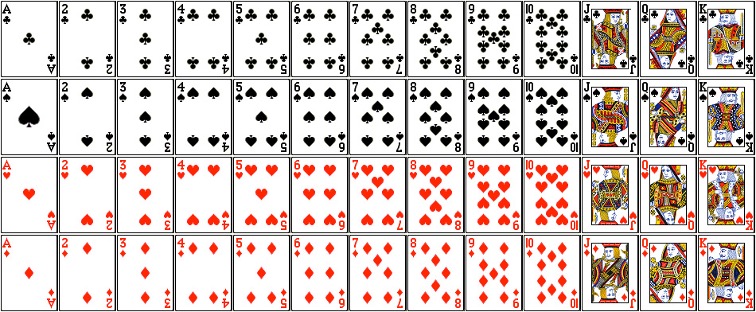
    A deck of 52 playing cards, face up. There are 26 black cards, 26 red cards.  There are 4 suits (clubs, spaces, hearts, and diamonds) with 13 cards in each suit. There 12 "face cards."

    Then she pulls out a new deck of cards. She removes the plastic wrap from the deck of new cards, opens the box, and pulls out the cards. She removes the jokers and any other cards not displayed in the picture above. Then she starts shuffling the cards – which is difficult because the cards are brand new and slippery. She continues to shuffle and reshuffle until you agree that the deck is well-shuffled. Then she sets the deck down.

    To verify that you know how to calculate various probabilities for a randomly drawn card, she asks the following questions which you answer correctly.

    • If I randomly select a card, what is the probability of drawing a red card?
      YOUR ANSWER: 26/52 = 0.5 or 50%
    • If I randomly select a card, what is the probability of drawing a 9?
      YOUR ANSWER: 4/52 0.0769 or 7.69%
    • If I randomly select a sample of two cards, what is the probability that both cards are red?
      YOUR ANSWER: (26/52)(25/51) 0.2451 or 24.51%
    • In the above calculation you multiplied, (26/52)(25/51). Why?
      YOUR ANSWER: Randomly selecting a sample of two cards means we draw two cards – one at a time without replacement. So a random sample of two red cards means the first card is red and the second card is red. When we randomly select the first card, the probability we draw a red card is 26 red cards out of 52 total cards, or 26/52. We set that first red card aside. So, when we randomly select the second card, there are only 25 red cards out of a total of 51 cards, so the probability we get a red card is 25/51. We need to calculate the probability that the first card is red AND the second card is red. So we multiply the two fractions together, (26/52)(25/51).

    Then your classmate says, “O.K. Let’s make a little bet. If you draw a black card, I will help you with all remaining homework in this class.” If not, you must wash and wax my car for me. Since she opened a brand new deck of cards right in front of you and you verified they were well-shuffled, you know the probability of drawing a black card is 0.5 or 50%, so you agree to the bet.

    She picks up the deck of cards, fans them out (face down of course), and asks you to randomly select a card. You select a card and turn it over. It’s red – not black.

    You set the card aside and ask to try again. She reluctantly agrees and warns that if you lose, you will have to wash and wax her car twice. But if you win, you will not have to wash and wax her car, and she will help you with your homework as promised. You draw another card. It’s red – not black.

    You set the card on top of the previously drawn red card and ask to try a third time. Again, she reluctantly agrees, and you draw another card. It’s red – not black. You must now wash and wax her car three times. You decide to quickly calculate the probability of randomly selecting a sample of three red cards.

    or 11.76%

    You set the card on top of the previously drawn red cards and think, “The next card has to be black.” You ask to try a fourth time. Again, she reluctantly agrees, and you draw another card. It’s red – not black. You now have a random sample of 4 red cards, and you must wash and wax her car four times.

    You set the card on the stack of previously drawn red cards, and ask to try again. Once again, she reluctantly agrees, and you draw another card.


    Prompt

    Question 1

    What is the probability of drawing a random sample of 4 red cards (write the probability as a decimal and a percentage)? Would you consider the random sample of 4 red cards unusual? Why or why not?

    Question 2

    What is the probability of drawing a random sample of 5 red cards (write the probability as a decimal and a percentage)? Would you consider the random sample of 5 red cards unusual? Why or why not?

    Question 3

    When your classmate began shuffling the deck of cards, what obvious assumption did you believe was true? If you draw a random sample of 5 red cards from the deck, should you reject that assumption? Why or why not?

    Question 4

    Based on your responses to the previous question, what will you infer about the deck of cards?


    Module 14 Discussion Board

    Use the Module 14 (opens in a new tab) to ask questions or provide feedback about the problems in any Module 14 activity – including this peer-reviewed assignment.


    Review Feedback

    • Instructor feedback is only available after an assignment is graded.
    • Use these (opens in a new tab) to learn how to review feedback.

    Click the “Next” or > button to continue.

    Content by Cuyamaca College math faculty and inspired by Dr. Roxy Peck.

    Rubric

    Formative Assessments

    Formative Assessments

    Criteria Ratings Pts

    This criterion is linked to a Learning OutcomeAnswering the Prompt

    10 ptsFull CreditThe first submission demonstrates a good-faith effort to address each part of the Prompt. Either in the first draft or the optional final draft, all parts of the “Prompt” are addressed and the responses demonstrate attainment of the learning objectives in the “Progress Check” section of the assignment. The answers are correct. The writing/work is clear. The explanation/work is reasonable, well-organized, and easy to follow.8.5 ptsMostly CorrectThe first submission demonstrates a good-faith effort to address most of the Prompt. In the optional final draft all parts of the “Prompt” are addressed, and the responses demonstrate attainment of the learning objectives in the “Progress Check” section of the assignment. The answers are mostly correct. The writing/work is clear. The explanation/work is reasonable, well-organized, and easy to follow.

    6 ptsOne or more incorrectThe first submission demonstrates a good-faith effort to respond to a smaller portion of the Prompt. In the first draft or the optional final draft, one or more parts of the “Prompt” are not addressed or are incorrect. Or, answers do not demonstrate attainment of the learning objectives in the “Progress Check” section of the assignment. Or, answers are correct, but the writing/work is unclear, incorrect, or difficult to follow.0 ptsNo MarksThe first submission does not demonstrate a good-faith effort to address the Prompt.

    10 pts

    Total Points: 10

  • Hi pleas I need help for my homework

    Progress Check

    Use this activity to explore how probability is used in statistical inference.


    Directions

    Use the drop-down menu to learn about the three steps needed to complete this assignment.

    Three steps to complete the assignment

    Context

    You are studying with one of your classmates who is acing this class. She displays the following picture.

    A deck of 52 playing cards, face up. There are 26 black cards, 26 red cards.  There are 4 suits (clubs, spaces, hearts, and diamonds) with 13 cards in each suit. There 12 "face cards."

    Then she pulls out a new deck of cards. She removes the plastic wrap from the deck of new cards, opens the box, and pulls out the cards. She removes the jokers and any other cards not displayed in the picture above. Then she starts shuffling the cards – which is difficult because the cards are brand new and slippery. She continues to shuffle and reshuffle until you agree that the deck is well-shuffled. Then she sets the deck down.

    To verify that you know how to calculate various probabilities for a randomly drawn card, she asks the following questions which you answer correctly.

    • If I randomly select a card, what is the probability of drawing a red card?
      YOUR ANSWER: 26/52 = 0.5 or 50%
    • If I randomly select a card, what is the probability of drawing a 9?
      YOUR ANSWER: 4/52 0.0769 or 7.69%
    • If I randomly select a sample of two cards, what is the probability that both cards are red?
      YOUR ANSWER: (26/52)(25/51) 0.2451 or 24.51%
    • In the above calculation you multiplied, (26/52)(25/51). Why?
      YOUR ANSWER: Randomly selecting a sample of two cards means we draw two cards – one at a time without replacement. So a random sample of two red cards means the first card is red and the second card is red. When we randomly select the first card, the probability we draw a red card is 26 red cards out of 52 total cards, or 26/52. We set that first red card aside. So, when we randomly select the second card, there are only 25 red cards out of a total of 51 cards, so the probability we get a red card is 25/51. We need to calculate the probability that the first card is red AND the second card is red. So we multiply the two fractions together, (26/52)(25/51).

    Then your classmate says, “O.K. Let’s make a little bet. If you draw a black card, I will help you with all remaining homework in this class.” If not, you must wash and wax my car for me. Since she opened a brand new deck of cards right in front of you and you verified they were well-shuffled, you know the probability of drawing a black card is 0.5 or 50%, so you agree to the bet.

    She picks up the deck of cards, fans them out (face down of course), and asks you to randomly select a card. You select a card and turn it over. It’s red – not black.

    You set the card aside and ask to try again. She reluctantly agrees and warns that if you lose, you will have to wash and wax her car twice. But if you win, you will not have to wash and wax her car, and she will help you with your homework as promised. You draw another card. It’s red – not black.

    You set the card on top of the previously drawn red card and ask to try a third time. Again, she reluctantly agrees, and you draw another card. It’s red – not black. You must now wash and wax her car three times. You decide to quickly calculate the probability of randomly selecting a sample of three red cards.

    or 11.76%

    You set the card on top of the previously drawn red cards and think, “The next card has to be black.” You ask to try a fourth time. Again, she reluctantly agrees, and you draw another card. It’s red – not black. You now have a random sample of 4 red cards, and you must wash and wax her car four times.

    You set the card on the stack of previously drawn red cards, and ask to try again. Once again, she reluctantly agrees, and you draw another card.


    Prompt

    Question 1

    What is the probability of drawing a random sample of 4 red cards (write the probability as a decimal and a percentage)? Would you consider the random sample of 4 red cards unusual? Why or why not?

    Question 2

    What is the probability of drawing a random sample of 5 red cards (write the probability as a decimal and a percentage)? Would you consider the random sample of 5 red cards unusual? Why or why not?

    Question 3

    When your classmate began shuffling the deck of cards, what obvious assumption did you believe was true? If you draw a random sample of 5 red cards from the deck, should you reject that assumption? Why or why not?

    Question 4

    Based on your responses to the previous question, what will you infer about the deck of cards?


    Module 14 Discussion Board

    Use the Module 14 (opens in a new tab) to ask questions or provide feedback about the problems in any Module 14 activity – including this peer-reviewed assignment.


    Review Feedback

    • Instructor feedback is only available after an assignment is graded.
    • Use these (opens in a new tab) to learn how to review feedback.

    Click the “Next” or > button to continue.

    Content by Cuyamaca College math faculty and inspired by Dr. Roxy Peck.

    Rubric

    Formative Assessments

    Formative Assessments

    Criteria Ratings Pts

    This criterion is linked to a Learning OutcomeAnswering the Prompt

    10 ptsFull CreditThe first submission demonstrates a good-faith effort to address each part of the Prompt. Either in the first draft or the optional final draft, all parts of the “Prompt” are addressed and the responses demonstrate attainment of the learning objectives in the “Progress Check” section of the assignment. The answers are correct. The writing/work is clear. The explanation/work is reasonable, well-organized, and easy to follow.8.5 ptsMostly CorrectThe first submission demonstrates a good-faith effort to address most of the Prompt. In the optional final draft all parts of the “Prompt” are addressed, and the responses demonstrate attainment of the learning objectives in the “Progress Check” section of the assignment. The answers are mostly correct. The writing/work is clear. The explanation/work is reasonable, well-organized, and easy to follow.

    6 ptsOne or more incorrectThe first submission demonstrates a good-faith effort to respond to a smaller portion of the Prompt. In the first draft or the optional final draft, one or more parts of the “Prompt” are not addressed or are incorrect. Or, answers do not demonstrate attainment of the learning objectives in the “Progress Check” section of the assignment. Or, answers are correct, but the writing/work is unclear, incorrect, or difficult to follow.0 ptsNo MarksThe first submission does not demonstrate a good-faith effort to address the Prompt.

    10 pts

    Total Points: 10

  • Hi pleas Ineed help for my homework

    In social work, the ability to navigate community systems and build professional networks is a core skill. This assignment ensures you are on track for your final report in SW 110 and helps you begin narrowing your focus for the next class in this series: SW 120 – Fields of Service.

    Instructions: To complete this class, students must visit a non-profit in any community that provides support or services to community members. For the final assignment, you will need to visit the non-profit organization, speak with staff to learn about the organization, take a tour, and gain an understanding of the work they do, how they do it, and the impact they have on clients and the community.

    For THIS assignment, you do NOT need to visit a non-profit yet.

    Instead, please provide a short, 250-400-word written answer to the following questions (2-3 paragraphs at MOST):

    1. Targeting a Field: Look up local non-profit organizations near you. As you research the local nonprofits and the services they provide clients and the community, I’m guessing you will find one or two more interesting than the rest. What “Field” of service are they in? What I mean by that is what category of social work do they fall into (e.g., Gerontology, School Social Work, Child Welfare, Medical Social Work)? How does the agency you are contacting fit into that field?
    2. Professional Outreach: List the agencies you have researched or contacted. Provide:
      • Organization Name
      • Address
      • Which Field of Service do they address?
      • Who was your point of contact, and what was the result of your outreach?
    3. The “Why”: Connect this agency to our course topics. Why is this specific site a good place to observe a “social problems approach” in action?
    4. Logistics: Confirm your scheduled date and time. If you haven’t secured a spot yet, what is your “Plan B” to ensure you meet the course deadline?

    Rubric

    SW120 Site Visit 1

    SW120 Site Visit 1

    Criteria Ratings Pts

    This criterion is linked to a Learning OutcomeClear identification of a specific SW Field

    5 ptsFull Marks0 ptsNo Marks

    5 pts

    This criterion is linked to a Learning OutcomeProfessional OutreachOrganization Name, Address, Field, Point of Contact

    5 ptsFull Marks2.5 ptsPartially answered the question

    0 ptsNo Marks

    5 pts

    This criterion is linked to a Learning OutcomeThe “Why”Connect this agency to our course topics. Why is this specific site a good place to observe a “social problems approach” in action?

    4 ptsFull Marks2 ptsPartially answered the question

    0 ptsNo Marks

    4 pts

    This criterion is linked to a Learning OutcomeLogistics/Plan BConfirm your scheduled date and time. If you haven’t secured a spot yet, what is your “Plan B” to ensure you meet the course deadline?

    4 ptsFull Marks2 ptsPartially answered the question

    0 ptsNo Marks

    4 pts

    Total Points: 18

  • Answer in question accordingly.

    Answer in question accordingly.=