Category: Statistics

  • Hi pleas I need help for my homework

    In this project, we’ll use our unique IAT random samples to demonstrate what we learned in Unit 4 (Module 11).

    WARNING: Since this project is equivalent to an exam, I will not be able to help you. However, you can still rely on your classmates for help, and I can answer clarification questions.


    Progress Check

    Use this activity to assess whether you can:

    • Determine when to use a hypothesis test or a confidence interval to draw a conclusion about a population mean.
    • Construct a confidence interval to estimate a population mean when conditions are met.
    • Under appropriate conditions, conduct a hypothesis test about a population mean and state the conclusion in context.
    • Under appropriate conditions, conduct a hypothesis test about a difference between two population means and state a conclusion in context.

    Directions

    WARNING: The directions for Unit Projects differ from the directions for homework and lab assignments.

    Use the drop-down menu to learn about the four steps needed to complete this assignment.

    Four steps to complete the assignment

    Data

    From this point forward, all links in this assignment open in a new tab.

    • Login and open StatCrunch ().
    • Open your IAT sample data set in StatCrunch ().

    Prompt

    Question 1

      1. Which IAT data set are you working with?
      2. Use StatCrunch and your unique IAT sample to estimate the mean age for the population of IAT participants at the 90% confidence level. Copy the contents of your StatCrunch output window and paste them into your response. (No need to type anything here – just copy and paste the contents of your StatCrunch output window.)
      3. Are conditions met to estimate the mean age for the population of IAT participants? (Be sure to support your answer as demonstrated throughout Unit 8.)
      4. State the confidence interval, and then interpret the confidence interval in context.
      5. What is the margin of error (MOE)?
      6. Which would be more accurate, the 90% confidence interval you found or an 85% confidence interval? Briefly explain. Which would be more precise? Briefly explain.

    Question 2

    At the end of 2020, the mean age of the U.S. population was estimated to be 38.5 years old. You are tasked with determining whether the mean age of the population of IAT participants (for your chosen IAT data set) differs from the mean age of the U.S. population.

      1. Let be the mean age of the population of IAT participants for your chosen IAT data set. State the hypotheses (symbolically and in words). Include a clear description of the populations and the variable.
      2. Use StatCrunch to create a histogram for the age distribution in your unique IAT sample. Download the StatCrunch output window and embed your histogram with your response. Can we safely use the t-test with your IAT sample? Explain.
      3. Perform the t-test using StatCrunch. Copy the information from the StatCrunch output window and paste it into your response.
      4. Based on the P-value, state your conclusions in context. Use a 5% level of significance. (NOTE: Since StatCrunch correctly calculates the P-value for either a one-tailed or a two-tailed test, you do not need to change the StatCrunch P-value.)
      5. Using the context of this scenario, explain the meaning of each of the following items from the StatCrunch output for the hypothesis test.
        Std. Err (standard error)
        T-stat (T-score)
        P-value

    Question 3

    Below are the variables for Question 3. For all data sets, the categorical variable is the explanatory variable, and the quantitative variable is the response variable.

    Race IAT Variables for Question 3 Only

    Open for the Race variables
    Open for the Weapons variables

    Weight IAT Variables for Question 3 Only

    Open for the Weight variables
    • Choose only one of the categorical variables listed for your IAT data set and note the two groups for your chosen categorical variable.
    • Here is the question to be investigated for the two groups in your chosen categorical variable.
      Do the population of IAT participants in one group score higher on the IAT test than the population of IAT participants in the other group?

    To answer the question we are investigating, respond to each of the following

      1. Use StatCrunch to determine the sample size and sample mean, , for the two groups in your chosen categorical variable ().
        • Copy your StatCrunch output table and paste it into your response. Then relabel the categorical variable groups with the appropriate word(s), i.e. replace the group numbers with the appropriate word(s) to describe the group (see the Categorical Variable section above for your data set).
        • Which of the two groups has the smallest sample mean? Which has the largest sample mean?
      1. Let be the population mean for the group with the largest sample mean. Let be the population mean for the group with the smallest sample mean. State the null and alternative hypotheses (symbolically and in words). Include a clear description of the populations and the variable.
      2. To test your hypotheses, is it appropriate to use the two-sample T-test? If so, explain why and provide any supporting evidence. If not, start over and choose the other categorical variable listed with your chosen IAT data set.
        • WARNING: If it is not appropriate to use the two-sample T-test for either of the categorical variables listed with your IAT data set, something may be wrong. Stop and contact me as soon as possible.
        • Proceed only if it is appropriate to use the two-sample T-test.
      3. Use StatCrunch to carry out the test ().
        Copy the content in the StatCrunch output window (text and the table) and paste it into the textbox as your response to this item.
      4. Use a 5% significance level to state a conclusion. Be sure to state your conclusion in context and in terms of what a more positive score on the IAT means for your data set. (Hint: in the variables section above, click on the variable descriptions link for your data set. The variable descriptions page opens in a new window. Review the Interpreting the IAT section at the top of that page.)

    StatCrunch Directions

    Here is a PDF document with all (opens in a new tab).


    Unit 8 Project Discussion Board

    Use the Unit 8 Project (opens in a new tab) to ask questions or provide feedback about this project.


    Review Feedback

    • Instructor feedback is only available after an assignment is graded.
    • Use these (opens in a new tab) to learn how to review feedback.

    Click the “Next” or > button to continue.

    Content by Cuyamaca College math faculty and licensed under the .

    Rubric

    Unit 8 Project

    Unit 8 Project

    Criteria Ratings Pts

    This criterion is linked to a Learning OutcomeQuestion 1aIAT data set is identified

    1 ptsComplete0 ptsIncomplete

    1 pts

    This criterion is linked to a Learning OutcomeQuestion 1bStatcrunch was used to correctly create a 90% confidence interval for the mean age.

    3 ptsComplete2 ptsPartial Credit

    0 ptsIncomplete

    3 pts

    This criterion is linked to a Learning OutcomeQuestion 1cSteps are correctly shown for checking conditions.

    3 ptsComplete2 ptsPartial Credit

    0 ptsIncomplete

    3 pts

    This criterion is linked to a Learning OutcomeQuestion 1dThe confidence interval is correctly stated and interpreted in context.

    3 ptsComplete2 ptsPartial Credit

    0 ptsIncomplete

    3 pts

    This criterion is linked to a Learning OutcomeQuestion 1eThe margin of error is correctly identified.

    3 ptsComplete0 ptsIncomplete

    3 pts

    This criterion is linked to a Learning OutcomeQuestion 1fCorrectly identified which confidence interval (90% vs. 85%) is more accurate and which is more precise. Explanations included.

    3 ptsComplete2 ptsPartial Credit

    0 ptsIncomplete

    3 pts

    This criterion is linked to a Learning OutcomeQuestion 2aHypotheses are provided in symbols and words. Includes a clear description of the populations and the variable.

    3 ptsComplete2 ptsPartial Credit

    0 ptsIncomplete

    3 pts

    This criterion is linked to a Learning OutcomeQuestion 2bA histogram was created using the correct variable. Correctly addressed the question “Can we safely use the t-test with your IAT sample?” Explanation included.

    3 ptsComplete2 ptsPartial Credit

    0 ptsIncomplete

    3 pts

    This criterion is linked to a Learning OutcomeQuestion 2cStatCrunch t-test is correct.

    3 ptsComplete2 ptsPartial Credit

    0 ptsIncomplete

    3 pts

    This criterion is linked to a Learning OutcomeQuestion 2dThe conclusion is correctly stated in context, with reference to the p-value.

    3 ptsComplete2 ptsPartial Credit

    0 ptsIncomplete

    3 pts

    This criterion is linked to a Learning OutcomeQuestion 2eThe meaning of the standard error, t-stat, and p-value is correctly provided in context.

    3 ptsComplete2 ptsPartial Credit

    0 ptsIncomplete

    3 pts

    This criterion is linked to a Learning OutcomeQuestion 3aStatCrunch output table is correctly provided. Categorical variable groups were relabeled with appropriate words. Correctly identified the group with the smallest sample mean and largest sample mean.

    3 ptsComplete2 ptsPartial Credit

    0 ptsIncomplete

    3 pts

    This criterion is linked to a Learning OutcomeQuestion 3bHypotheses are correctly stated symbolically and in words. Includes a clear description fo the populations and the variable.

    3 ptsComplete2 ptsPartial Credit

    0 ptsIncomplete

    3 pts

    This criterion is linked to a Learning OutcomeQuestion 3cExplanation of why the two-sample t-test is appropriate and supporting evidence is provided.

    3 ptsComplete2 ptsPartial Credit

    0 ptsIncomplete

    3 pts

    This criterion is linked to a Learning OutcomeQuestion 3dStatCrunch output for the two-sample t-test is correctly provided.

    3 ptsComplete2 ptsPartial Credit

    0 ptsIncomplete

    3 pts

    This criterion is linked to a Learning OutcomeQuestion 3eThe conclusion is correctly stated in context. Reference to what a “more positive score” on an IAT means for your data set is provided.

    3 ptsComplete2 ptsPartial Credit

    0 ptsIncomplete

    3 pts

    This criterion is linked to a Learning OutcomeSelf-EvaluationThe final draft begins (or ends) with a self-evaluation of your first draft. The self-evaluation describes how you demonstrated attainment of the learning objectives in the “Progress Check” section of the assignment, OR what you needed to correct in order to demonstrate attainment of the learning objectives.

    4 ptsComplete2 ptsPartial CreditThe self-evaluation does not describe how you demonstrated attainment of the learning objectives in the “Progress Check” section of the assignment, or what you needed to correct in order to demonstrate attainment of the learning objectives.

    0 ptsIncompleteNo self-evaluation of your first draft is included with your final draft. Or, you did not commit a good-faith effort on your first draft and therefore your self-evaluation is not applicable.

    4 pts

    Total Points: 50

  • MULTIPLE REGRESSION ATTENDANCE

    MULTIPLE REGRESSION ATTENDANCE

  • the project

    Title: Statistical Modeling of Climate Variability and Agricultural Productivity in East Africa

    1. Introduction

    • Background on climate change and its impact on agriculture.
    • Statement of the problem: unpredictable rainfall patterns affecting food security.
    • Research gap: limited region-specific predictive models for East Africa.
    • Objectives:
      • Develop statistical models to forecast rainfall variability.
      • Assess the impact of climate variability on crop yields.
      • Provide policy recommendations for sustainable agriculture.

    2. Literature Review

    • Overview of global climate-agriculture studies.
    • Review of statistical methods used (e.g., time series, Bayesian models, machine learning).
    • Identification of gaps in regional studies.

    3. Methodology

    • Data sources: meteorological stations, satellite data, agricultural yield records.
    • Statistical techniques:
      • ARIMA and GARCH for rainfall modeling.
      • Regression and mixed models for yield prediction.
      • Cross-validation and model comparison.
    • Ethical considerations: data integrity, transparency.

    4. Results & Analysis

    • Presentation of rainfall variability models.
    • Correlation between climate variables and crop yields.
    • Comparative performance of different statistical approaches.

    5. Discussion

    • Interpretation of findings in the context of food security.
    • Limitations of the study.
    • Implications for policy and practice.

    6. Conclusion & Recommendations

    • Summary of contributions.
    • Suggestions for future research.
    • Policy recommendations for governments and NGOs.
  • Hi pleas I need help for my homework

    Module 23 Homework 1 – Hypothesis Test for a Difference in Two Population Means (5 of 7)

    Progress Check

    Use this activity to assess whether you and your peers can:

    • Under appropriate conditions, conduct a hypothesis test about a difference between two population means. State a conclusion in context.

    Directions

    Use the drop-down menu to learn about the three steps needed to complete this assignment.

    Three steps to complete the assignment

    Context

    Do undergraduates sleep less than graduate students?

    A student conducted a study of sleep habits at a large state university. His hypothesis is that undergraduates will party more and sleep less than graduate students. He surveyed random samples of 75 undergraduate students and 50 graduate students. Subjects reported the hours they sleep in a typical night.

    For this hypothesis test, he defined the population means as follows:

    • is the mean number of hours undergraduate students sleep in a typical night.
    • (mu_2) is the mean number of hours graduate students sleep in a typical night.

    Variables

    Hours: typical number of hours a student sleeps each night
    Program: undergraduate or graduate

    Program is the explanatory variable, and the data is categorical. Hours is the response variable, and the data is quantitative.


    Data

    Download the datafile, and upload the file in StatCrunch.

    • Open the sleep2 data set in the Stats at Cuyamaca College group on StatCrunch ( – opens in a new tab).

    Prompt

    1. State the null and alternative hypotheses. Include a clear description of the populations and the variable.
    2. Explain why we can safely use the two-sample T-test in this case.
    3. Use StatCrunch to carry out the test. ()
      Copy the content in the StatCrunch output window (text and the table) and paste it into the textbox with your response.
    4. State a conclusion in the context of this problem.

    List of StatCrunch Directions

    Click here for StatCrunch Directions

    Module 23 Discussion Board

    Use the Module 23 (opens in a new tab) to ask questions or provide feedback about the problems in any Module 23 activity – including this peer-reviewed assignment.


    Review Feedback

    • Instructor feedback is only available after an assignment is graded.
    • Use these (opens in a new tab) to learn how to review feedback.

    Content by the and licensed under .

    Rubric

    Formative Assessments w/ StatCrunch

    Formative Assessments w/ StatCrunch

    Criteria Ratings Pts

    This criterion is linked to a Learning OutcomeAnswering the Prompt

    8 ptsFull CreditThe first submission demonstrates a good-faith effort to address each part of the Prompt. Either in the first draft or the optional final draft, all parts of the “Prompt” are addressed and the responses demonstrate attainment of the learning objectives in the “Progress Check” section of the assignment. The answers are correct. The writing/work is clear. The explanation/work is reasonable, well-organized, and easy to follow.

    6.5 ptsMostly CorrectThe first submission demonstrates a good-faith effort to address most of the Prompt. In the optional final draft all parts of the “Prompt” are addressed, and the responses demonstrate attainment of the learning objectives in the “Progress Check” section of the assignment. The answers are mostly correct. The writing/work is clear. The explanation/work is reasonable, well-organized, and easy to follow.

    3.5 ptsOne or more incorrectThe first submission demonstrates a good-faith effort to respond to a smaller portion of the Prompt. In the first draft or the optional final draft, one or more parts of the “Prompt” are not addressed or are incorrect. Or, answers do not demonstrate attainment of the learning objectives in the “Progress Check” section of the assignment. Or, answers are correct, but the writing/work is unclear, incorrect, or difficult to follow.

    0 ptsNo MarksThe first submission does not demonstrate a good-faith effort to address the Prompt.

    8 pts

    This criterion is linked to a Learning OutcomeStatCrunch

    2 ptsFull CreditStatCrunch graphs and/or tables are correct and embedded with your work.

    1 ptsPartial CreditStatCrunch graphs and/or tables are incorrect or missing important information.

    0 ptsNo CreditNo StatCrunch information is embedded with your post. Or all StatCrunch work is incorrect.

    2 pts

    Total Points: 10

  • Statistics project

    Statistics ProjectThis activity is designed to put the concepts learned into a real-world context. You will need tosurvey at least 30 random people, record their results, and organize, analyze, and drawconclusions from your data. You will hand-in your data sheet and a written report containing thecalculations and conclusions asked for in the project description. Answer all questions and stateall conclusions in complete sentences. Clearly show all calculations.Data Collection Decide on a survey question that will yield qualitative (non-numerical) data and record itas question #1 on the data sheet. Decide on survey question that will yield quantitative (numerical) data and record it asquestion #2 on the data sheet. Randomly survey at least 30 people asking them the 2 questions. Legibly record their responses on the data sheet.Data Organization/AnalysisInclude the following in your report. What sampling method did you use to collect the data? Why did you choose thismethod?Using the data from question 1, Organize the data in a circle graph. Clearly title and label the circle graph. Analyze the data by finding the mode. Explain why you cannot find the mean or themedian of this data. State a conclusion about the population that is shown by the data you collected.Using the data from question 2, Analyze the data by finding the mean, median, mode, range, and standard deviation. State a conclusion about the population that is shown by the data you collected. Is the data normally distributed? Why or why not?Note: If you are unsure whether your questions will yield satisfactory results, check with mebefore conducting the survey.

  • Understand the role of mean, median and mode in Data analysi…

    In statistics easures of central tendency such as the mean, median, and mode are commonly used to summarize and describe data sets. However, each measure provides different insights depending on the distribution and nature of the data.

    This question explores how these three measures compare, when each is most appropriate to use, and how outliers can affect their values. Additionally, it examines real-world situations where choosing the correct measure is important for accurate interpretation.

    Can you explain the differences between mean, median, and mode, and provide examples of when each measure would be most useful?

  • Hi pleas I need help for my homework

    Progress Check

    Use this activity to assess whether you and your peers can:

    • Explain the meaning of each relevant item from the StatCrunch output when testing a claim about a mean.

    Directions

    Use the drop-down menu to learn about the three steps needed to complete this assignment.

    Three steps to complete the assignment

    Prompt

    1. In a previous lab we tested the following hypotheses, : and : (where is the mean number of alcoholic drinks consumed by students at a liberal arts college).

      In a random sample of 75 students, the mean was 3.93 alcoholic drinks consumed in a week. Here is the StatCrunch output from the hypothesis test.
      : Mean of variable
      :
      :

      Hypothesis test results
      Variable Sample Mean Std. Err. DF T-Stat P-value
      number of drinks per week 3.9333333 0.43592434 74 -1.8275343 0.0717

      Using this context and the StatCrunch output, explain the meaning of each of the following.

      1. Std. Err (standard error)
      2. T-stat (T-score)
      3. P-value
    2. In a previous matched pairs lab we tested the following hypotheses, where is the mean of the differences in corn yield for a plot of land (regular seed minus kiln-dried ): H0 : = 0 and Ha : < 0. In a random sample of 11 seeds of each type, the mean of the differences in the sample was -33.7. Here is a StatCrunch print-out of the hypothesis test.

      Paired T hypothesis test:
      : Mean of the difference between Regular seed and Kiln-dried seed
      :
      :

      Hypothesis test results
      Difference Mean Std. Err. DF T-Stat P-value
      Regular seed – Kiln-dried seed -33.727273 19.951346 10 -1.6904761 0.0609

      Differences stored in column, Differences.

      Using this context and the StatCrunch output, explain the meaning of each of the following.

      1. Std. Err (standard error)
      2. T-stat (T-score)
      3. P-value.

    Module 22 Discussion Board

    Use the Module 22 (opens in a new tab) to ask questions or provide feedback about the problems in any Module 22 activity – including this peer-reviewed assignment.


    Review Feedback

    • Instructor feedback is only available after an assignment is graded.
    • Use these (opens in a new tab) to learn how to review feedback.

    Click the “Next” or > button to continue.

    Content by Cuyamaca College math faculty and licensed under the .

    Rubric

    Formative Assessments

    Formative Assessments

    Criteria Ratings Pts

    This criterion is linked to a Learning OutcomeAnswering the Prompt

    10 ptsFull CreditThe first submission demonstrates a good-faith effort to address each part of the Prompt. Either in the first draft or the optional final draft, all parts of the “Prompt” are addressed and the responses demonstrate attainment of the learning objectives in the “Progress Check” section of the assignment. The answers are correct. The writing/work is clear. The explanation/work is reasonable, well-organized, and easy to follow.8.5 ptsMostly CorrectThe first submission demonstrates a good-faith effort to address most of the Prompt. In the optional final draft all parts of the “Prompt” are addressed, and the responses demonstrate attainment of the learning objectives in the “Progress Check” section of the assignment. The answers are mostly correct. The writing/work is clear. The explanation/work is reasonable, well-organized, and easy to follow.

    6 ptsOne or more incorrectThe first submission demonstrates a good-faith effort to respond to a smaller portion of the Prompt. In the first draft or the optional final draft, one or more parts of the “Prompt” are not addressed or are incorrect. Or, answers do not demonstrate attainment of the learning objectives in the “Progress Check” section of the assignment. Or, answers are correct, but the writing/work is unclear, incorrect, or difficult to follow.0 ptsNo MarksThe first submission does not demonstrate a good-faith effort to address the Prompt.

    10 pts

    Total Points: 10

  • Estadsticas

    Estadsticas

    La estadstica es una rama de la matemticas que se encarga de recopilar , organizar ,analizar y facilitar representar datos para facilitar y comprender fenmenos complejos, y se utilizan en diversas reas.La estadstica es fundamental en diversos campos como la salud, economa, educacin etc.elementos principales del tratamiento y organizacin de datos y estadsticas: poblacin con punto total de individuos objetos o ejemplos que se requieren estudiar como por ejemplo todos los alumnos en de una escuela .unidad estadstica es cada uno de los elementos que forma la poblacin muestra como por ejemplo alumno . Variable caractersticas que se estudia de cada unidad estadstica y que se puede variar . Dato valor concreto que toma la variable de una estadstica ejemplos la estatura de alumnos


  • Hi pleas I need help for my homework

    Progress Check

    Use this activity to assess whether you and your peers can:

    • Under appropriate conditions, conduct a hypothesis test about a mean for a matched pairs design. State a conclusion in context.

    Directions

    Use the drop-down menu to learn about the three steps needed to complete this assignment.

    Three steps to complete the assignment

    Step 1: Review the Rubric

    • Before you submit your work, review the rubric at the bottom of this assignment.
    • Use the rubric as a checklist to determine whether you are ready to submit your work.

    Step 2: First Draft

    • Commit a good-faith effort to address each item in the Prompt section below.
    • Please be sure to number your responses and include “white space” between problem numbers. This improves the readability and flow of your work. I cannot give feedback and grade jumbled work.
    • Use either of the following options to submit your work.
      OPTION 1: You can submit a text-entry assignment (i.e. typing your answers in Canvas). To learn how to submit a text-entry assignment, use these (opens in a new tab).
      OPTION 2: You can upload your paper-and-pencil work (or the digital equivalent). To learn how to upload your paper-and-pencil work, use these (opens in a new tab). WARNING – some file types may not be visible on my end. So to learn which files you can upload, be sure to use the directions link I provided for this option.
    • Not ready to submit a good-faith effort yet? Avoid frustration – use the link to the Questions, Answers, & Tips discussion board (at the bottom of this page) to post questions about this assignment (or visit the discussion board to answer your classmates’ questions). You can also contact me directly (see the homepage for my contact information).

    Step 3: Optional Final Draft

    • After you submit your good-faith attempt to fully respond to the questions in the Prompt section below, advance to the ANSWER(S) page.
    • You can use the ANSWER(S) page to correct your work and resubmit this assignment any time before I begin grading the problems. However, to earn full credit, you are not required to submit a final draft for this assignment. But if you do submit a final draft, I will only grade it if you submitted a good-faith effort on your first draft.
    • Warning – I will only grade your most recent submission. So if you choose to submit a final draft, please do not leave anything out, and please do not direct me to read an earlier submission. To maximize your score, your most recent submission (at the time I begin grading) must be complete.

    Context

    Gosset’s Seed Plot Data

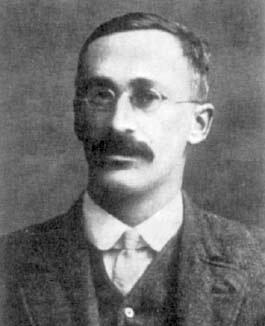
    William S. Gosset

    William S. Gosset was employed by the Guinness brewing company of Dublin. Sample sizes available for experimentation in brewing were necessarily small. At that time, Gosset contacted a famous statistician Karl Pearson (1857-1936) and was told that there were no techniques for developing probability models for small data sets. Gosset studied under Pearson, and the outcome of his study was perhaps the most famous paper in statistical literature, “The Probable Error of a Mean” (1908), which introduced the T-distribution.

    Since Gosset was employed by Guinness, any work he produced would be owned by Guinness, so he published under a pseudonym, “Student”; hence, the T-distribution is often referred to as Student’s T-distribution.

    To illustrate his analysis, Gosset used the results of seeding 11 different plots of land with two different types of seed: regular and kiln-dried. He wanted to determine if drying seeds before planting increased plant yield. Since different plots of soil may be naturally more fertile, this confounding variable was eliminated by using the matched pairs design and planting both types of seed in all 11 plots.

    The resulting data (corn yield in pounds per acre) are as follows.

    Corn Yield in Pounds per Acre
    Plot Regular seed Kiln-dried Seed
    1 1903 2009
    2 1935 1915
    3 1910 2011
    4 2496 2463
    5 2108 2180
    6 1961 1925
    7 2060 2122
    8 1444 1482
    9 1612 1542
    10 1316 1443
    11 1511 1535

    We use these data to test the hypothesis that kiln-dried seed yields more corn than regular seed.

    Because of the nature of the experimental design (matched pairs), we are testing the difference in yield.

    Differences in Corn Yield
    Plot Regular seed Kiln-dried Seed Difference
    1 1903 2009 106
    2 1935 1915 20
    3 1910 2011 101
    4 2496 2463 33
    5 2108 2180 72
    6 1961 1925 36
    7 2060 2122 62
    8 1444 1482 38
    9 1612 1542 70
    10 1316 1443 127
    11 1511 1535 24

    Note that the differences were calculated: regular kiln-dried.


    Variables

    Regular seed: regular seeds that were traditionally used for planting
    Kiln-dried seed: seeds that were kiln-dried before planting


    Data

    Open the seeds datafile in the Stats at Cuyamaca College group on StatCrunch ( – opens in a new tab).


    Prompt

    1. State the hypotheses and define the parameter.
    2. Checking conditions: Since Gosset invented the T-distribution, we will assume that his sample meets the conditions and proceed with the T-test. Regardless, answer these questions to demonstrate your understanding of the conditions for use of the T-model.

      But first you will need to review the (opens in a new tab).

      1. Which graph is used to check conditions? Why?
      2. What do we look for in the graph to verify that conditions are met?
      3. What else do we need to know about the sample of seeds before using the T-test?
    3. Use StatCrunch to find the T-score and the P-value. Hint: as you work through the StatCrunch directions, keep in mind that we want to calculate the differences as regular kiln-dried . So you will choose Regular seed for Sample 1 and Kiln-dried seed for Sample 2. ()
      Copy the information in the StatCrunch output window and paste it into the textbook with your response.
    4. State a conclusion based on the context of this scenario.

    List of StatCrunch Directions

    Click here for StatCrunch Directions

    Each link will open in a new window. To return to this assignment, either close the new tab or select the tab for this assignment.

    • (You only need to do this once.)
    • (no screenshots; please use these directions)

    Here is a PDF document with all .


    Module 22 Discussion Board

    Use the Module 22 (opens in a new tab) to ask questions or provide feedback about the problems in any Module 22 activity – including this peer-reviewed assignment.


    Review Feedback

    • Instructor feedback is only available after an assignment is graded.
    • Use these (opens in a new tab) to learn how to review feedback.

    Click the “Next” or > button to continue.

    Content by Cuyamaca College math faculty and licensed under the .

    Rubric

    Formative Assessments w/ StatCrunch

    Formative Assessments w/ StatCrunch

    Criteria Ratings Pts

    This criterion is linked to a Learning OutcomeAnswering the Prompt

    8 ptsFull CreditThe first submission demonstrates a good-faith effort to address each part of the Prompt. Either in the first draft or the optional final draft, all parts of the “Prompt” are addressed and the responses demonstrate attainment of the learning objectives in the “Progress Check” section of the assignment. The answers are correct. The writing/work is clear. The explanation/work is reasonable, well-organized, and easy to follow.6.5 ptsMostly CorrectThe first submission demonstrates a good-faith effort to address most of the Prompt. In the optional final draft all parts of the “Prompt” are addressed, and the responses demonstrate attainment of the learning objectives in the “Progress Check” section of the assignment. The answers are mostly correct. The writing/work is clear. The explanation/work is reasonable, well-organized, and easy to follow.

    3.5 ptsOne or more incorrectThe first submission demonstrates a good-faith effort to respond to a smaller portion of the Prompt. In the first draft or the optional final draft, one or more parts of the “Prompt” are not addressed or are incorrect. Or, answers do not demonstrate attainment of the learning objectives in the “Progress Check” section of the assignment. Or, answers are correct, but the writing/work is unclear, incorrect, or difficult to follow.0 ptsNo MarksThe first submission does not demonstrate a good-faith effort to address the Prompt.

    8 pts

    This criterion is linked to a Learning OutcomeStatCrunch

    2 ptsFull CreditStatCrunch graphs and/or tables are correct and embedded with your work.1 ptsPartial CreditStatCrunch graphs and/or tables are incorrect or missing important information.

    0 ptsNo CreditNo StatCrunch information is embedded with your post. Or all StatCrunch work is incorrect.

    2 pts

    Total Points: 10

  • Statistics Question

    Assessment 4: Details and instructions

    Completion requirements

    Assessment 4

    Written assessment

    Word count/length

    2000 words equivalent

    SILOs

    • Comprehend the fundamental principles of epidemiology and biostatistics (SILO 1).
    • Explain how the principles of epidemiology and biostatistics can be applied in public health (SILO 2).
    • Explain, differentiate, and apply fundamental concepts of epidemiology and biostatistics (SILO 3).
    • Recognise, generate, interpret and communicate descriptive and basic inferential statistics (SILO 5).

    Graduate capabilities

    • DISCIPLINE KNOWLEDGE AND SKILLS
    • INQUIRY AND ANALYSIS – Critical Thinking and Problem Solving
    • INQUIRY AND ANALYSIS – Research and Evidence-Based Inquiry

    Generative AI use

    The applicable AI use category is: AI Planning

    You may use AI tools to:

    • revise or understand concepts
    • brainstorm ideas
    • structure/outline responses
    • clarify task requirements

    You should not use AI to analyse or interpret data, nor generate text for submission.

    As AI use is permitted in this assessment you are required to complete and submit an AI Acknowledgment after submitting your assessment.

    .

    Task details

    Prepare a written briefing document. Using the dataset provided, identify demographic, social and behavioural factors that are associated with routine check-up attendance.

    Assessment criteria

    This assessment will measure your ability to:

    • Write an effective summary that clearly articulates a key message (25%)
    • A summary of the design of the BRFSS, its limitations and a comparison with a peer-reviewed paper (10%)
    • Description of the population (20%)
    • Examination of the association between four social and/or behavioural factors and routine check-up attendance (40%)
    • Appropriately format and organise the written assignment (5%)

    Refer to the Rubric for marking and feedback information.

    Instructions

    Scenario:

    A generation ago, people used to see their doctor only when they were sick or dying. Today, preventative health care is becoming commonplace as people become more educated and empowered about their own health. Regular, routine medical check-ups can help find potential health issues before they become a problem. Early detection of problems gives the best chance for getting the right treatment quickly, avoiding any complications.

    You have been employed as part of an active public health campaign that is aiming to increase routine 12-monthly check-ups. Your job is to analyse a subset of variables (as indicated below) and describe the association between these variables and routine check-up attendance and highlight the people with lower rates of check-ups in the last 12 months where a targeted campaign would be of most benefit.

    The Behavioral Risk Factor Surveillance System (BRFSS) is a collaborative project between all of the states in the United States (US) and participating US territories and the Centers for Disease Control and Prevention (CDC). The BRFSS is a system of ongoing health-related telephone surveys designed to collect data on health-related risk behaviours, chronic health conditions and use of preventive services from the non-institutionalised adult population (18 years) residing in the United States. Using the prepared BRFSS data, identify demographic, social and behavioural factors that are associated with routine check- up attendance.

    Dataset: The data set is updated each time the subject runs. You can access the relevant file on the main assessment page under Assignment 4.

    Format:

    Your written briefing document must consist of a 250-word executive summary and a detailed structured results section. This template will assist you with the format and information required.

    Executive Summary (Marks: 25)

    The 250-word summary should identify demographic, social and behavioural factors that are associated with routine check-up attendance in a statistically valid, clear and concise manner that can be understood by someone with minimal knowledge of epidemiology and biostatistics. You must identify a group or groups of people where a targeted campaign would be of most benefit.

    Results:

    The BRFSS:

    • A short summary of the study design of the BRFSS and a brief discussion of its limitations (no more than 250 words (Marks: 6)
    • Find a peer-reviewed paper in the literature that quantitatively investigates the determinants of routine check-up attendance. Compare the designs between the study described in that paper and BRFSS (not more than 150 words). (Marks: 4) (Note: When you search for a peer-reviewed paper, avoid literature reviews or papers that analysed BRFSS data)

    Description of the population and analysis (no more than 1350 words):

    1) By analysing the BRFSS dataset, answer the following questions:

    • In your dataset, what percentage of participants reported routine check-up attendance? (Marks: 5)
    • Create a table of routine check-up attendance and 3 demographic factors, one of which must be binary, one numerical and one multi-category categorical (either nominal or ordinal). (Marks: 15)
      • Each cell should contain the appropriate summary measure and 95% confidence interval
      • The final column in the table should contain the p-value for statistical tests of difference or independence (i.e., tests that we covered in week 6). Footnotes should be used to indicate which statistical tests were used.

    2) Examine the association between 4 social and/or behavioural factors and routine check-up attendance:

    • In an appropriate manner, present the results of analysis into the effect of four social and/or behavioural factors on routine check-up attendance. You must analyse a binary, numeric, nominal and ordinal factor. (Marks: 20)
      • For each factor you should report:
        • Variable name and data type
        • Name of measure calculated
        • Results of statistical analysis performed
        • Statistical interpretation
        • The Stata output (including visible code) e.g.

    Figure 1
    Stata output example

    • For one of the identified factors, you should explore the possibility of confounding or effect modification by sex. (Marks: 10)
      • Perform appropriate analysis
      • Present STATA output (including visible code if applicable)
      • Report the results in a table
      • Interpret your result
    • Conduct a multivariable regression and present the results, including visible Stata output, of the adjusted regression model by including the four factors you examined in your analysis of social and behavioural factors. (Marks: 10)
      • Report the results in a table.
      • Interpret your result.

    Resources and readings relevant for assessment

    • The data file can be found on the main Assessment page under Assessment 4.
    • The Behavioral Risk Factor Surveillance System (BRFSS)
    • Assessment 4 template